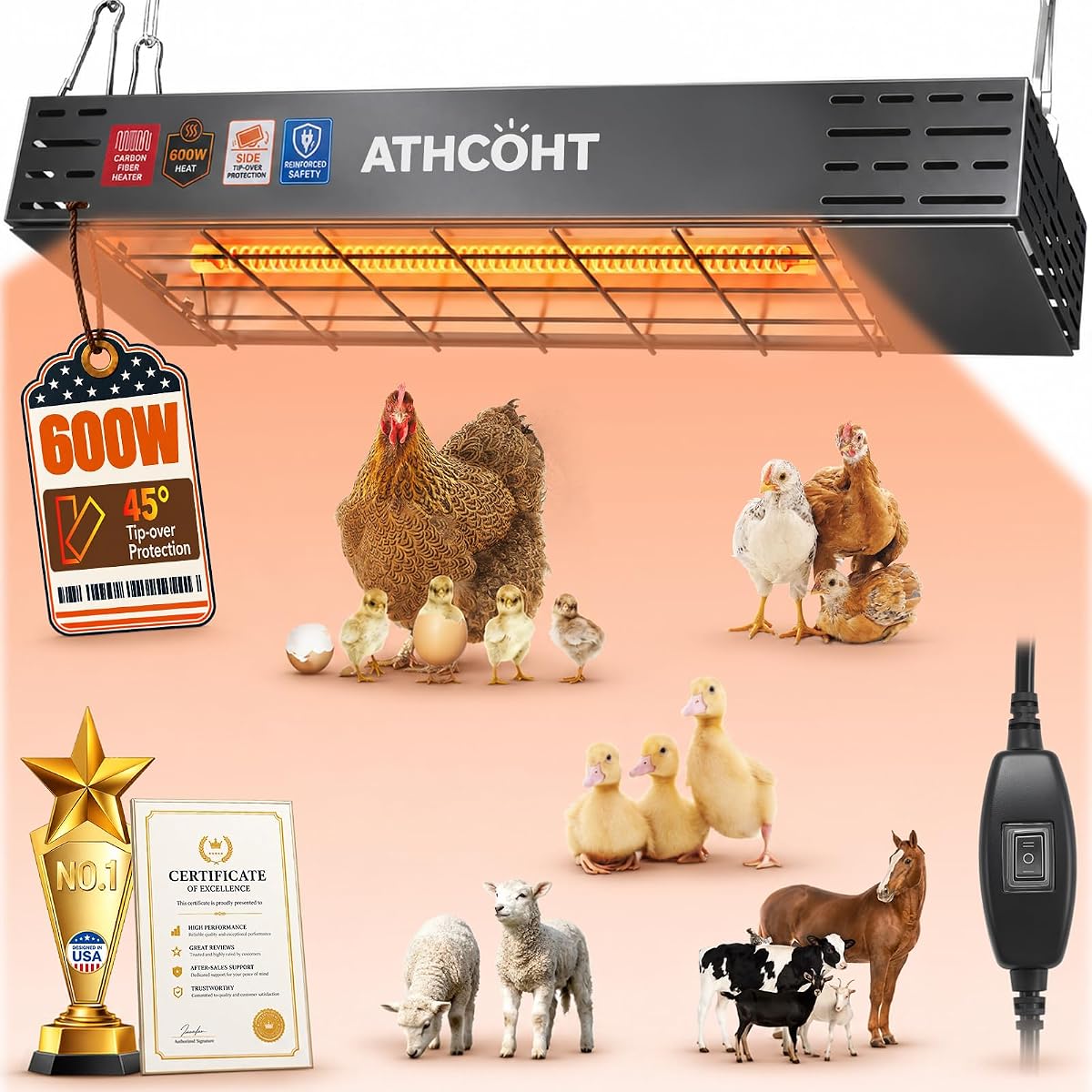
600W Carbon Fiber Chicken Coop Heater
4.9Editor score
600W and 300W settings
Automatic tip-over shutoff
Extended 5.40-foot design
Protective grill and housing
12,000-hour rated lifespan
Our heat lamp for chickens guide compares ten adjustable options for brooders, coops, chicks, poultry, and livestock, with practical safety guidance included.
A heat lamp for chickens can be the difference between a comfortable brooder and a cold, stressful environment during chilly weather. The right fixture should provide consistent radiant warmth while discouraging chicks from pecking the bulb, overheating, or becoming trapped beneath it. Fixtures, bulbs, wattage, guards, hanging systems, and environmental protection all affect how safely and effectively the lamp performs.
This guide compares ten options using the information supplied by each manufacturer, including heating capacity, power controls, coverage, safety features, installation requirements, intended species, and suitability for indoor or outdoor spaces. It covers complete hanging heaters, a ceramic bulb-only option, a UV-equipped fixture, and a multipurpose clamp lamp to help buyers match the design to their brooder setup.
Each review identifies the product's defining strengths and practical limitations, followed by buying advice on sizing, heat placement, electrical safety, weather resistance, and animal behavior. Ratings and specifications can change as manufacturers update listings, and market conditions can affect availability, so readers should confirm the current details and listing information before purchasing.
4.9Editor score

4.9Editor score
4.6Editor score
The comparison below highlights each heater's power, heat controls, protective design, and intended application, making it easier to identify the right option for a small brooder, backyard coop, or mixed-animal enclosure.


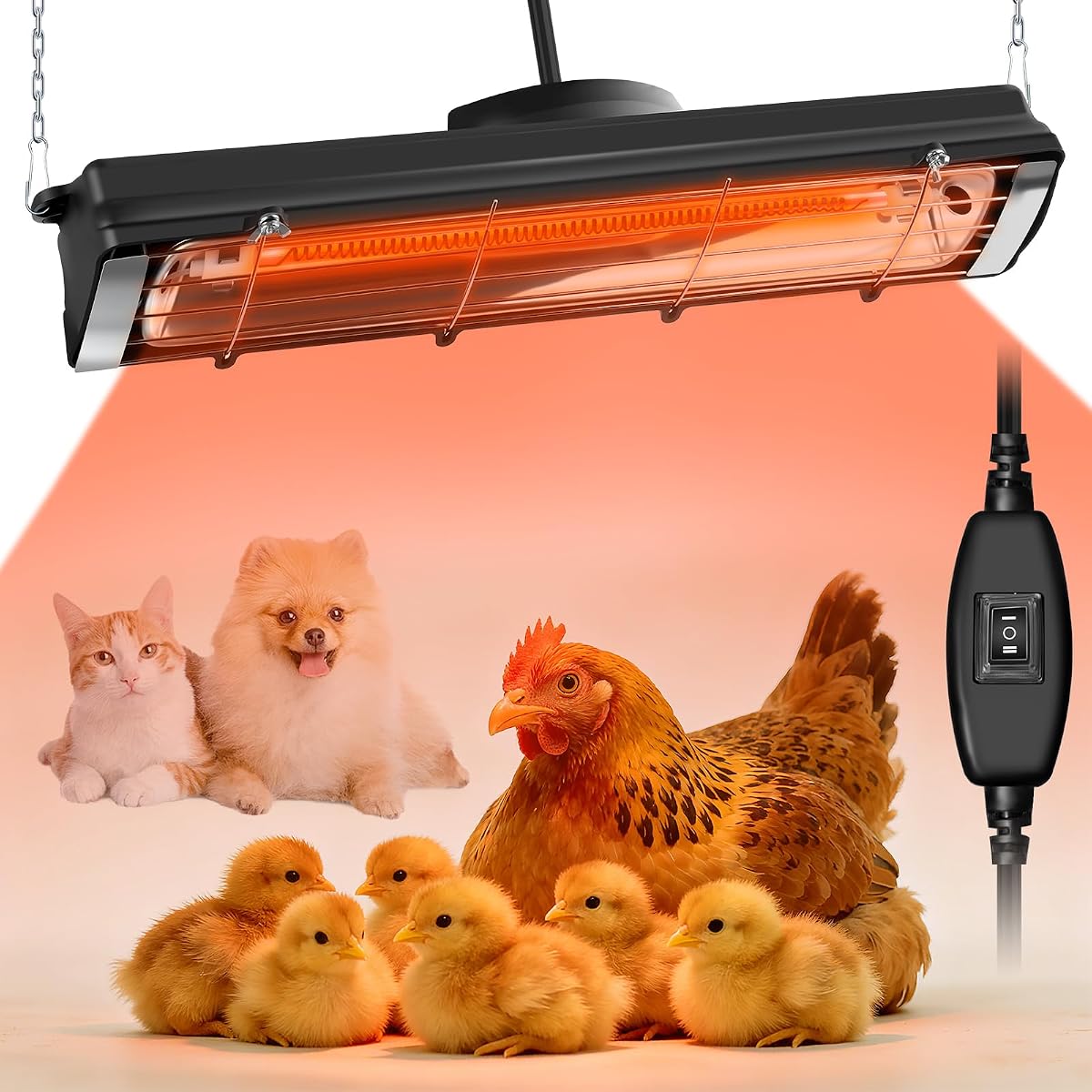


The Woods Clamp Lamp is a versatile 300-watt fixture that holds its position with spring-loaded, non-marring grips and directs heat using a double-ball universal joint and adjustable ten-inch reflector. It carries a 4.4 rating, and its greatest strength is flexibility: the lamp can be attached to a suitable support, repositioned as conditions change, and removed when it is no longer needed.
We may earn a commission when you buy through this link, at no additional cost to you.
A metal bulb guard adds a physical barrier between the bulb and nearby birds, while the attached six-foot, 18 AWG SPT-2 cord gives the fixture useful reach without requiring a permanently mounted support. The reflector concentrates light and radiant heat in a defined area, allowing the keeper to establish a warm zone instead of trying to heat an entire enclosure evenly.
The main limitation is that this is a general-purpose clamp lamp rather than a specialized coop heater. It is listed for indoor use, does not include a bulb, and accepts a medium-base E26 bulb up to 300 watts. It therefore requires a suitable indoor brooder, weather-protected area, and separate lamp rated for the intended wattage.
This lamp is a practical choice for a small indoor brooder or temporary warming area where a drilled mounting point would be inconvenient. Buyers who need simple repositioning, focused heat, and a guarded bulb will appreciate it most. It is less suitable for exposed outdoor coops or buyers who want a complete, purpose-built hanging kit.
The double-ball joint and adjustable reflector make it possible to direct warmth toward a group of chicks without permanently fixing the fixture in one position. This is especially useful while chicks move between different areas of a brooder.
The metal guard discourages direct contact with the bulb, while the spring grips are designed not to mark surfaces. Buyers should still position the lamp so birds cannot peck the fixture or become trapped beneath it.
We may earn a commission when you buy through this link, at no additional cost to you.
This 250W infrared chicken coop heat lamp offers two heating levels through included 250W and 175W bulbs. The 4.5-rated design is aimed at chick brooders and small poultry spaces, with the manufacturer recommending the higher setting for temperatures at or below 32°F and the lower setting for milder conditions at or above that threshold.
We may earn a commission when you buy through this link, at no additional cost to you.
The fixture uses a die-cast aluminum lampshade and stainless steel protective guard, both of which support durability around a brooder. Two three-foot stainless steel chains allow the unit to be suspended at different heights, helping the keeper create a temperature gradient and maintain a safer distance between chicks and the heat source.
Its straightforward wattage control is less granular than a thermostat, but that simplicity may suit keepers who want to select a familiar heat level and monitor conditions themselves. The waterproof and dustproof construction is also notable for damp or dusty breeding environments, although exposed electrical connections still require appropriate weather protection.
This is a good fit for backyard chicken keepers brooding chicks, ducklings, or young poultry in a semi-outdoor or sheltered space. It comes ready to hang and includes both bulbs and chains, reducing the need for extra assembly. Buyers seeking quiet light-free warmth, adjustable height, and two heat levels will find it especially straightforward.
Switching between the 250W and 175W bulbs provides a basic way to respond to colder or milder weather. The selection should still be confirmed with an independent thermometer placed at chick level.
The aluminum shade, stainless steel guard, and dustproof and waterproof design suit breeding spaces that may experience dampness or dust. Electrical connections and any extension arrangement must remain protected from moisture.
We may earn a commission when you buy through this link, at no additional cost to you.
The 17.5-inch carbon fiber heater combines an extended heating element with selectable 150W and 300W output. Its 4.4 rating reflects a product designed to distribute heat across a wider area than a compact conventional reflector, making it relevant to brooders housing groups of chicks, ducks, or other young animals.
We may earn a commission when you buy through this link, at no additional cost to you.
The manufacturer describes electrical-to-heat conversion efficiency above 95%, an operating lifespan up to 10,000 hours, and quick heating without an open flame. A protective metal mesh reduces direct animal contact, while the carbon fiber tube is described as cooler than traditional bulbs. The included chain allows the height to be adjusted without drilling into a wall.
Trade-offs include the unit's 17.5-inch length, which may take up more visual and physical space than a smaller emitter, and the absence of a listed automatic tip-over shutoff. The two power levels also require the keeper to monitor temperatures rather than relying on a built-in thermostat. These are manageable when the fixture is installed away from animals and adjusted with a thermometer.
This heater is best for broad brooder coverage and keepers who want a tubular alternative to a hanging infrared bulb. It can also serve poultry, reptiles, puppies, kittens, or sick pets when appropriate. Buyers who value extended reach, protected heating elements, and simple hanging adjustments should give it strong consideration.
The elongated element provides a larger radiant area within the brooder. Its dimensions may be especially helpful when chicks spread out beneath it instead of clustering under a small bulb.
The carbon fiber tube is described as running cooler than conventional bulbs, and the surrounding mesh helps prevent direct pecking. Correct hanging height remains essential for controlling the temperature chicks experience.
We may earn a commission when you buy through this link, at no additional cost to you.
The 400W large brooder heater is designed for buyers who want a single carbon fiber unit to serve a sizable group. Its title mentions suitability for up to 60 chickens, while the listed heating coverage reaches 5,000 square centimeters. Two selectable modes—200W and 400W—allow the keeper to vary output as conditions and animal needs change.
We may earn a commission when you buy through this link, at no additional cost to you.
Protective design is a major selling point. The listing describes an aluminum composite housing, heavy-duty stainless steel mesh, fire-retardant materials, and a UL-certified power cord with an IP67 waterproof rating. The carbon fiber bulb is rated for up to 12,000 hours and heats in one to two seconds, according to the manufacturer.
The 4.0 rating is the lowest among the products reviewed, so buyers should examine real-world feedback before assuming the ambitious capacity and efficiency claims will fit their enclosure. It is also worth noting that wattage alone does not determine the temperature at chick level, and its 400W setting may be excessive for a small brooder unless the hanging height is carefully managed.
This heater makes sense for larger brooders, chicken coops, and mixed spaces containing ducks, dogs, cats, sheep, or other animals. It is less attractive for tiny brooders because the large heater can overwhelm chicks if set too low. Its installation kit and dual controls are convenient, but careful temperature monitoring is still essential.
The stated 5,000-square-centimeter coverage and 400W maximum output are intended for larger groups and livestock areas. Actual results depend on enclosure dimensions, insulation, outside weather, and hanging height.
A stainless steel cover, aluminum housing, fire-retardant materials, and a UL-certified IP67 cord create several layers of protection. These features support durability, although they do not replace safe placement and routine inspection.
We may earn a commission when you buy through this link, at no additional cost to you.
This 600W carbon fiber heater is the strongest high-output model in the comparison and carries a 4.9 rating. It offers 600W and 300W settings, an extended five-foot heating design, and automatic tip-over protection that cuts power if the unit is overturned. Those features make it especially relevant to cold-weather coops and larger livestock areas.
We may earn a commission when you buy through this link, at no additional cost to you.
The carbon fiber technology is listed as providing 90% heat output, a 12,000-hour lifespan, and 28% power savings compared with traditional heating. A protective grill and durable housing add another layer of separation between the heating element and animals. The unit is intended for chicken coops, barns, sheep houses, horse stables, and other livestock environments.
The major trade-off is power. A 600W setting can be excessive for a small brooder of newly hatched chicks, particularly if the fixture is hung too low. The lack of a stated thermostat means keepers must verify conditions with a thermometer and adjust either the setting or the hanging height. The automatic tip-over shutoff is helpful but cannot prevent excessive ambient heat.
For keepers with a large, drafty enclosure or several animals, this is a premium-style option with generous output and thoughtful safety controls. It is less suitable for a compact indoor brooder unless used cautiously at the lower setting and positioned higher. Buyers wanting serious cold-weather capacity should prioritize its high output, extended coverage, and tip-over protection.
Automatic shutoff stops continuous heating if the heater is overturned. This adds an extra layer of protection in active coops where fixtures may be bumped by animals, people, doors, or shifting supports.
The 600W and 300W modes provide substantial heat for large coops and livestock buildings. The smaller enclosure should use the lower setting and careful height adjustment to avoid overheating chicks.
We may earn a commission when you buy through this link, at no additional cost to you.
The 350W carbon fiber chicken coop heater offers an appealing balance between capacity and controllability. It has a 4.9 rating, dual 350W and 175W modes, and a listed warmup time of three seconds. These characteristics make it a versatile option for chicken coops, chick brooders, and spaces housing several other animal types.
We may earn a commission when you buy through this link, at no additional cost to you.
Safety and convenience are handled with an aluminum alloy shade, stainless steel mesh cover, overheat protection, and a waterproof coating. The 5.6-foot power cord offers more installation flexibility than a short cord, while the included metal chain and hook let users suspend the unit without drilling and adjust its height.
The heater does not list a built-in thermostat, so the visual power switch remains a basic control rather than automatic temperature regulation. A larger coop may also require a properly rated extension arrangement, which should be installed according to electrical guidance and kept dry. Buyers should not assume the heat remains distributed evenly throughout an entire structure.
This is an excellent general recommendation for backyard chicken keepers who want more than a basic bulb but do not need the very high output of the 600W model. It works for chickens, ducks, dogs, cats, cattle, sheep, chicks, and other animals in indoor or outdoor setups. Its quick warmup, dual modes, UL certification, and protective cover create a well-rounded package.
The 350W and 175W modes make it easier to reduce output during mild periods or for smaller groups. Confirming chick-level temperature with a thermometer remains necessary after every adjustment.
The aluminum alloy shade, stainless steel mesh, and waterproof coating suit indoor and outdoor applications. The included chain and hook simplify hanging while allowing the heater to be repositioned as the brooder layout changes.
We may earn a commission when you buy through this link, at no additional cost to you.
The QRQ heater combines supplemental lighting, ultraviolet output, adjustable heat, brightness controls, and a timer in one enclosure. Its 4.1 rating reflects a feature-rich alternative for keepers who want more than a single-purpose heat source. Three heating levels cover 200W, 350W, and 500W, while brightness can be set low, medium, or high.
We may earn a commission when you buy through this link, at no additional cost to you.
The lighting array includes eight full-light bulbs, twelve 365nm UVA bulbs, and four UVB bulbs identified in the listing as 310nm UVA and 395nm UVB. A test card is included. The timer offers three-, six-, nine-, and twelve-hour settings in addition to continuous operation, which may be convenient for predictable schedules.
This complexity is also the main caution. The lamp is intended for multiple reptile and bird species as well as poultry, but ultraviolet exposure should be managed appropriately for the animals and enclosure. The shell is described as insulated and not heating up, with UL and FCC certification, overload protection, and overheating protection. Installation should use the top ring rather than the wires.
This model is best for a keeper seeking combined heat and lighting with timer-based operation. It can serve chicken houses, dog houses, greenhouses, and reptile or bird habitats. Buyers who only need straightforward radiant warmth may prefer a simpler carbon fiber heater, while those who value dimming and UV controls will find this option unusually versatile.
The fixture integrates full-spectrum lighting, UVA, UVB, and heating in one housing. This can reduce the need for separate lighting equipment when the animals and enclosure are appropriate for those features.
Three-, six-, nine-, and twelve-hour timers plus a continuous setting provide useful scheduling choices. The correct mode should complement the enclosure's actual temperature needs rather than replace monitoring.
We may earn a commission when you buy through this link, at no additional cost to you.
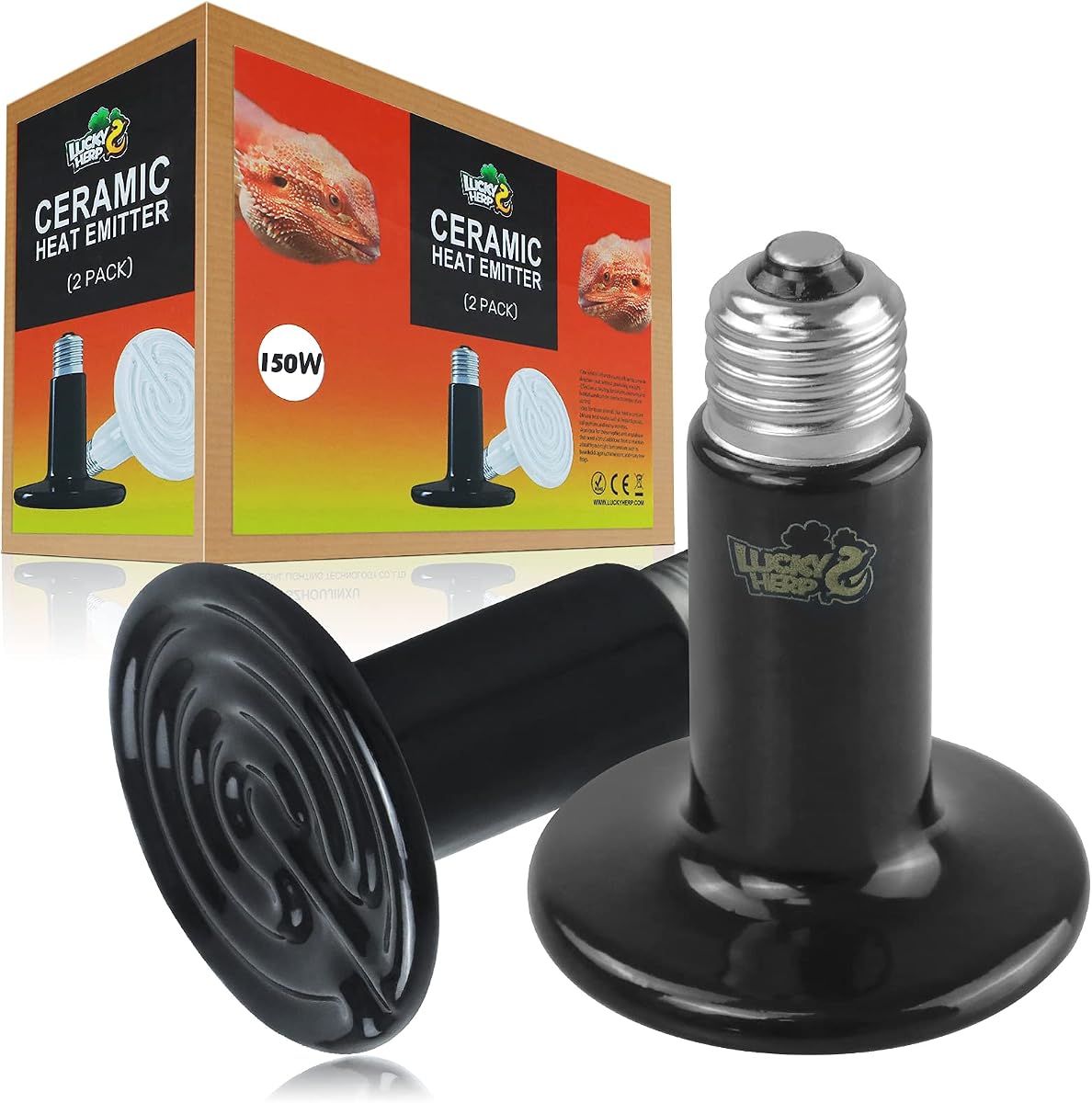
The LUCKY HERP two-pack consists of 150W ceramic heat emitters that produce warmth without visible light. With a 4.6 rating, it is a practical choice for keepers who want a ceramic alternative to glowing incandescent-style bulbs. It can be used for chickens, reptiles, amphibians, dogs, and cats.
We may earn a commission when you buy through this link, at no additional cost to you.
The emitters use thick ceramic material and are rated for up to 10,000 hours. They fit a standard E26 base, operate on 120 volts, and reach rated temperature in approximately four minutes after a rapid initial rise during the first ten seconds. Because no visible light is emitted, nighttime warming is less disruptive to the animals.
This is not a complete hanging heater. Buyers must obtain good-quality ceramic lamp holders, and the product instructions call for a distance of more than 30 centimeters from reptiles. The bulbs should not be switched on immediately after being turned off or cycled too frequently. Those limitations matter because a loose or poor-quality holder can undermine the safety of an otherwise simple installation.
This option is best for a small brooder or enclosed habitat where light-free warmth is preferred and a suitable fixture is already available. Its two-bulb pack also provides a spare. It is less convenient for outdoor coops because the buyer must source weather-appropriate holders and any necessary guard or suspension system.
The ceramic elements heat the enclosure without producing visible light, making them useful at night. The absence of light should still be considered when chicks or other young animals need a consistent day-night routine.
A standard E26 connection makes the bulbs familiar to install, but the instructions require a good-quality ceramic holder. Secure guarding and correct spacing remain the keeper's responsibility.
We may earn a commission when you buy through this link, at no additional cost to you.
The 600W adjustable brooder heater uses two notably different power settings: 600W and 100W. It has a 4.9 rating? No—its supplied rating is 3.9, making it the lowest-rated product here and one that warrants careful comparison. Its 14-inch format, protective mesh, and ready-to-hang design remain attractive for larger brooders.
We may earn a commission when you buy through this link, at no additional cost to you.
The listing states that the unit reaches a maximum surface temperature of 257°F and warms within three seconds. A metal chain allows height adjustment without drilling, while galvanized steel construction and a thickened cord carrying international UL certification are intended to support durability and electrical safety.
The very broad control range can be useful in cold conditions, but it also creates a meaningful risk of overshooting the temperature required by young chicks. The 100W setting gives a gentler alternative, and the manufacturer mentions a brooding temperature of 93°F that should decrease as chicks grow. A thermometer is indispensable because the switch does not demonstrate thermostat-level precision.
This heater is best for larger brooders or livestock areas where substantial heat is needed and the keeper can manage the setup carefully. It may be less suitable for newly hatched chicks in a small enclosure because the 600W mode can produce too much heat at low hanging heights. Correct height adjustment and continuous temperature checks are essential.
The wide difference between 600W and 100W creates room for changing weather and different animal sizes. Because the controls are not described as a calibrated thermostat, the keeper must validate the result with a thermometer.
Galvanized steel, protective mesh, an adjustable chain, and a thickened UL-certified cord create a practical outdoor-oriented package. The unit should still be hung securely away from moisture and animal interference.
We may earn a commission when you buy through this link, at no additional cost to you.
The 400W carbon fiber brooder lamp combines quick heating with a 4.8 rating and an extensive protective design. It provides 200W and 400W settings, heats in one to two seconds, and is described as flameless and light-free. That combination makes it suitable for indoor livestock areas where a visible glowing bulb would be unnecessary.
We may earn a commission when you buy through this link, at no additional cost to you.
The listing emphasizes UL testing and five layers of protection: corrosion resistance, high-voltage resistance, fire retardancy, waterproofing, and explosion resistance. A protective safety cage surrounds the heater, and the included chain, carbon fiber bulb, and cover simplify installation. The eight-foot-two-inch cord gives the fixture ample reach from a suitable outlet.
The product is primarily described for indoor use, and it lacks a listed thermostat, timer, or automatic tip-over shutoff. Its claimed 28% power saving and three-times faster, more stable heating compared with conventional lamps are manufacturer claims, so buyers should evaluate the overall installation rather than relying on those figures alone.
This lamp is best for indoor chicken brooders and controlled livestock environments housing chicks, rabbits, cats, dogs, or reptiles. It is also suitable for keepers who prefer a light-free heat source and value multiple safety layers. For exposed outdoor installations, weather protection and secure electrical placement are essential.
The carbon fiber element starts producing heat within one to two seconds and does not emit visible light. These characteristics suit overnight brooders or enclosed areas where a glowing bulb is unnecessary.
UL testing, corrosion resistance, fire-retardant construction, waterproofing, and a safety cage form a substantial protective package. Routine inspection remains important, especially in dusty or humid animal areas.
We may earn a commission when you buy through this link, at no additional cost to you.
The right heater depends on enclosure size, animal age, local cold, electrical access, and how closely the keeper can monitor temperature. Use the following factors to compare complete fixtures, bulbs, controls, and safety features before making a selection.
A compact brooder filled with newly hatched chicks usually needs less total output than a large chicken coop or livestock building. The products in this guide range from 150W ceramic elements to 600W hanging heaters, and several models provide lower settings. Match the heater to the actual space rather than selecting the highest wattage available. Low-brightness enclosure, insulation, drafts, and the number and age of animals all change the heat requirement.
Choose a lower-output model for a small brooder and reserve high-output heaters for larger, draftier, or multi-animal spaces. Always verify the temperature at chick level after installation.
Higher wattage does not automatically mean a better heater. A fixture placed too close can overheat chicks, while one hung too high may not provide enough usable warmth. Two-mode controls offer a welcome middle ground: lower settings for mild conditions or smaller groups and higher settings for severe cold. Products with three power levels or timing functions provide more scheduling options, but they remain more complex than a straightforward switch.
Favor at least two selectable levels and pair the heater with an independent thermometer. Avoid relying on wattage, warmup time, or a built-in label alone to judge chick comfort.
Traditional reflectors focus heat into a relatively compact zone, which can help create a warm area within a larger enclosure. Extended carbon fiber elements are intended to spread warmth over a broader section. Brooders work best when chicks can move between a warm zone and a cooler area instead of being forced to remain directly under the heater.
Consider reflector diameter, element length, and the shape of the enclosure. Make sure the warm zone remains comfortable as chicks grow and their need for heat changes.
Chicks can peck bulbs, climb into fixtures, or become trapped beneath a lamp. Metal guards, mesh covers, safety cages, and enclosed housings create physical barriers that reduce direct contact. The correct installation is still essential: suspend the heater securely, keep chains out of pecking reach, and position the unit so birds cannot climb over or rest directly against it.
Choose a model with a substantial guard and inspect it for bent wires or damaged joints. Replace any compromised protective component before returning the heater to service.
A lamp labeled for indoor use may still be useful beneath a covered brooder in mild conditions, but it should not be assumed to tolerate rain or persistent dampness. Outdoor-oriented models mention waterproof coatings, IP67 cord ratings, dustproof structures, or corrosion-resistant housings. Those features improve suitability, but exposed plugs, connections, and unsupported extension arrangements can still create moisture hazards.
For outdoor coops, favor equipment explicitly designed for the environment and protect every electrical connection. Confirm that the lamp's stated location matches where it will actually be installed.
Look for grounded plugs, durable attached cords, overload or overheat protection, recognized certification, and a cord long enough to reach a suitable outlet without strain. Several products in this guide list UL certification or testing, while one also lists FCC certification. Certification does not remove the need for careful installation, regular inspection, and keeping connections dry.
Never overload an outlet, run cords through wet areas, or use a damaged cord. Follow the manufacturer's installation instructions and use appropriate electrical equipment for the outdoor location.
Most dedicated coop heaters use a chain, hook, or threaded mounting point so they can be suspended without drilling. Adjustable hanging height is valuable because chicks require different levels of warmth as they grow. The clamp lamp offers another approach, attaching temporarily to a suitable support and redirecting its reflector.
Make sure the support can carry the heater and that birds cannot manipulate the fixture. Follow the product's installation instructions, especially when they specify attaching the chain or hook rather than the electrical wires.
Heat and light are different needs. A light-free ceramic emitter or carbon fiber element can warm animals at night without disrupting a dark period. The QRQ model adds full light, UVA, UVB, dimming, and a timer, which may suit certain reptile and bird habitats. Poultry keepers should account for normal day-night routines when choosing a lamp that remains illuminated.
Choose light-free heating when uninterrupted darkness matters and supplemental lighting when the enclosure requires it. Use UV-equipped products only where the species, enclosure, and husbandry plan support that lighting.
Before installation, read the product instructions and inspect the heater, bulb, guard, chain, plug, and cord. Secure the hanging point above the brooder or coop area, keeping the lamp and its controls beyond the reach of chicks. Install any specified mesh, guard, bulb cover, or chain before placing the unit where animals can contact it. Begin with the lower heat setting or the manufacturer-recommended setting for the animal's age and enclosure size.
Position the heater to create a comfortable warm zone rather than heating the entire enclosure equally. Use an independent thermometer at chick level and check it frequently during the first days, when conditions change quickly, and whenever the weather, bird age, or lamp height changes. Chicks should be able to move away from the warmest area. A flock that crowds directly beneath the lamp may be too cold, while birds spread away from it or showing signs of overheating may need more heat or a different setup.
Inspect the fixture regularly for dust, corrosion, damaged wires, loose guards, and signs of pecking. Clean the fixture only after disconnecting power and according to its instructions. Do not splash water around the lamp, and keep electrical connections dry. Replace damaged or discolored bulbs, do not exceed the stated wattage, and avoid frequent on-and-off cycling. The QRQ model's instructions specifically warn against hanging it by the wires; use the top ring instead.
The correct wattage depends on the size of the brooder, the number and age of the chicks, insulation, and the surrounding temperature. The products reviewed range from 150W ceramic emitters to 600W heaters, but the wattage rating alone cannot predict the temperature chicks experience. Choose a model with selectable settings, hang it according to the instructions, and verify conditions with a thermometer at chick level.
There is no single distance that works for every heater because bulbs, carbon fiber elements, wattage, and enclosure conditions differ. Begin with the manufacturer's recommended placement and adjust based on measured temperature and chick behavior. Chicks should have a comfortable warm zone and enough space to move away from the direct heat. Never allow chicks to peck the bulb or climb into the fixture.
Carbon fiber heaters offer useful benefits such as quick heating, light-free operation, broad radiant warmth, and protective mesh on many models. However, no heater is risk-free. Safe use still requires secure hanging, proper clearance, protected electrical connections, regular inspection, and temperature monitoring. A guarded infrared bulb can also be used safely when correctly installed and monitored.
Only use a heater outdoors if its stated specifications support that environment. Look specifically for waterproof or IP-rated components, weather-resistant housing, and suitable cord protection. Models described only for indoor use are better placed in a sheltered brooder. Even outdoor-rated equipment should have plugs and connections protected from rain, dampness, dust, and animals.
Some heaters are designed for continuous operation, while others include timers or should be monitored according to their instructions. Overnight use may be necessary in cold weather, but the enclosure still needs a safe temperature range and reliable electrical supply. Check the thermometer at chick level and ensure the fixture is secure before leaving it operating unattended.
Heat and light serve different purposes. A light-free heat lamp can provide warmth without disturbing the dark period, which is useful at night. A separate daylight source may still be appropriate for young birds, while the QRQ model combines heating with full light, UVA, UVB, dimming, and a timer. Choose based on the animals' age, species, and husbandry routine.
Choose a fixture with a metal guard, mesh cover, cage, or enclosed housing, and keep the heating element beyond the birds' reach. Secure the chain and position the lamp so chicks cannot climb on the guard. Inspect protective parts for damage because even a small opening can let chicks reach a hot bulb.
A heat lamp usually refers to a complete fixture with a bulb or carbon fiber element, reflector, guard, cord, and hanging hardware. A heat emitter is often just the replaceable bulb or element. Emitters can be less expensive and flexible, but they require a suitable, high-quality holder and any necessary safety guard.
The 600W Carbon Fiber Coop Heater stands out for premium output, dual settings, extended coverage, and automatic tip-over shutoff, while the 350W Carbon Fiber Coop Heater offers a more balanced combination of quick heating, UL certification, weather-conscious construction, and adjustable mounting. For a simpler approach, the LUCKY HERP two-pack provides two light-free ceramic emitters for keepers who already have suitable holders.
Prioritize the variables that cannot be changed after installation: safe hanging clearance, a comfortable warm zone, reliable cord access, protected electrical connections, and a guard suited to the animals' behavior. Wattage matters, but it is only one part of the equation. Measure the enclosure, monitor chick-level temperatures, and choose lower and higher settings rather than assuming one output works for every season or stage of growth.
Finally, verify the latest listing details, certification information, included accessories, operating instructions, and current availability before purchasing. Product designs and manufacturer information can change, and market conditions affect what is offered. Use the comparison and buying guide as a starting point, then confirm that the selected heater fits the specific coop, brooder, and animals being kept.