
Easycargo Thermal Glue
4.4Editor score
Silicone thermal compound
Permanent component bonding
Non-electrically conductive
Suitable for heatsink attachment
Discover the best adhesives for electronic components, comparing curing speed, thermal performance, electrical properties, precision, and repair applications.
Adhesives for electronic components range from precision repair glues and non-corrosive sealants to thermal interface compounds and electrically conductive epoxies. A suitable product must bond effectively while respecting the thermal, electrical, and mechanical demands of the device being serviced.
This guide compares ten options according to their stated chemistry, cure behavior, temperature range, dispensing method, electrical characteristics, material compatibility, and intended electronics applications. It also distinguishes functional bonding products from protective coatings, thermal adhesives, and electrically conductive repairs.
Each review highlights the product most suitable for a particular task, along with any important limitations stated in the available product information. Ratings and product details reflect the supplied listings, while prices and availability can change, so readers should confirm current listing information before purchasing.
4.4Editor score

4.8Editor score

4.6Editor score
The table below compares all ten products by their primary function, chemistry, curing characteristics, and stated electronics uses, making it easier to distinguish repair glue, sealant, thermal adhesive, and conductive epoxy.


This electronic silicone adhesive sealant is designed primarily to protect, seal, and insulate electronic and electrical materials. It has a 4.6 rating, and its most useful distinction is the combination of a high-viscosity insulating formulation with a soft, elastic cured layer. Rather than serving as a high-strength structural repair glue, it acts as a protective coating that can help shield vulnerable assemblies from moisture and environmental exposure.
We may earn a commission when you buy through this link, at no additional cost to you.
The stated temperature range of -50°C to 200°C is particularly notable for enclosure sealing and conformal protection. After curing, the product is described as waterproof, impact resistant, and ductile, with its transparency remaining unchanged during prolonged use. Its flow characteristics also allow it to spread over parts without leaving deposits, making it relevant to circuit boards, cables, transformers, control boards, photovoltaic power supplies, and coils.
Users must not confuse its protective-sealant function with specialized thermal or conductive adhesive functions. A flexible silicone layer does not automatically replace a thermal interface material, and the product information does not establish suitability for every precision component. Application technique and curing behavior also matter, so testing on a representative area is advisable before coating an entire assembly.
Choose this sealant when the main goal is to protect electronics with an insulating, moisture-resistant layer. It is particularly relevant to exposed boards, power assemblies, and components that could benefit from conformal coverage. For bonding a heatsink to a processor, for creating an electrical bridge, or for reattaching a tiny phone component, one of the more specialized products in this guide will usually be easier to justify.
The cured coating provides a soft insulating layer over circuits and components. Its waterproof behavior and wide temperature tolerance make it useful where moisture resistance and thermal stability are more important than maximum structural strength.
Because this product is presented as a conformal sealant, it is better suited to protective coverage than to demanding load-bearing joints. It should not be selected solely because it is called an adhesive.
We may earn a commission when you buy through this link, at no additional cost to you.
The ALECPEA T-7000 is a two-pack precision adhesive aimed at electronics repair, jewelry work, and crafts. Its 4.6 rating reflects a broadly favorable customer response, while the included needle dispenser and anti-clog cap distinguish it from ordinary liquid glues. The product information identifies a concentration of 3200mpa and a solid content of 30%–35%, indicating a viscous adhesive capable of controlled placement.
We may earn a commission when you buy through this link, at no additional cost to you.
Flexibility is the standout technical claim. The cured glue is described as able to stretch to 900% of its original length without breaking, which can help it tolerate movement and vibration better than a rigid bond. It is also described as waterproof and compatible with surfaces including metal, glass, rubber, ceramic, fabric, and various plastics. These characteristics suit smartphone housings, displays, speakers, and other small assemblies.
The adhesive is not a universal electronics product. The listed uses exclude valuable or irreplaceable items, the manufacturer asks users to test a small area first, and no electrical-insulation or thermal-conductivity specification is provided. Its cured flexibility also does not mean it should be used as a substitute for a heat-transfer compound. A careful applicator is important because excess glue can be difficult to remove from tight enclosures.
This is a compelling option for technicians and careful hobbyists who need a strong, flexible, black adhesive for small electronics repairs. It works especially well when a narrow needle tip and a measured bead are important. For high-voltage insulation, processor heatsinks, or electrically conductive pathways, choose a product explicitly designed for those functions instead.
The needle applicator helps place adhesive around small parts without flooding the surrounding area. That control is valuable when working inside phones, tablets, cameras, and other compact devices.
The stated 900% stretch capacity allows the bond to accommodate some movement and vibration. This makes the adhesive more versatile than a rigid, brittle glue for housings and repaired plastic parts.
We may earn a commission when you buy through this link, at no additional cost to you.
Easycargo Thermal Glue is a silicone-based, thermal-conductive adhesive intended to bond heat-generating electronic parts to heatsinks. It has a 4.4 rating and focuses on permanent attachment rather than routine paste application. The listed uses include GPU VRM and VRAM components, IC chips, MOSFETs, voltage regulators, high-power LED arrays, 3D-printer assemblies, and TEC1-12706 Peltier modules.
We may earn a commission when you buy through this link, at no additional cost to you.
The primary advantage is the combination of mechanical retention and heat transfer. A traditional thermal paste can be effective at moving heat, but it does not hold a heatsink in place. This adhesive is designed to secure the cooler while helping conduct heat away from stressed components. Its non-electrically conductive and non-corrosive formulation is also intended to reduce the risk of unwanted electrical behavior or substrate damage.
The listing does not provide a numerical thermal conductivity value, so buyers cannot directly compare its heat-transfer rating with that of the Easycargo 50-gram compound in this guide. It is also important not to treat the product as a universal CPU interface. The stated applications focus on GPUs, VRMs, VRAM, ICs, MOSFETs, LEDs, printers, and Peltier assemblies, and permanent curing should be considered before positioning a heatsink.
This adhesive is a sensible choice for maintenance and DIY builds where a heatsink must stay secured to a component. It offers more purpose than general-purpose glue and requires less complex placement than a paste-only solution. For a processor or any other application where maximum heat-transfer performance must be verified against a specific conductivity value, review the product data and component guidance carefully before committing.
Unlike conventional thermal paste, this product is intended to remain bonded after placement. That makes it useful when a component and heatsink need both heat conduction and physical security.
The range of listed uses spans consumer computers, 3D printers, lighting systems, and Peltier assemblies. Verify the geometry and thermal requirements of the specific component before applying it.
We may earn a commission when you buy through this link, at no additional cost to you.
This 50-gram silicone adhesive compound is aimed at directly bonding LEDs, GPU chipsets, ICs, MOSFETs, printers, and other components to heatsinks. Its 4.6 rating is supported by a more measurable specification set than many competing listings: thermal conductivity of 0.975W/m-K, an adhesive and tensile strength of 2.1 MPA, and an approximate 30-minute drying time at 25°C.
We may earn a commission when you buy through this link, at no additional cost to you.
Thermal conductivity is the key reason to consider it. The stated 0.975W/m-K figure provides a concrete reference for comparison, while the viscous silicone formulation is intended to remain in place and transfer heat between a component and its cooler. The product also advertises strong adhesion to metals and non-metals, moisture resistance, odorlessness, and non-expansion, all of which are relevant to long-term electronic assemblies.
The listing contains a terminology inconsistency: it calls the product conductive thermal glue in places while also explicitly stating that it is non-conductive. The electrical description should therefore be treated cautiously, and the product should not be assumed to provide an intentional electrical path. There is also an explicit warning that it cannot be used between a CPU and heatsink. Its fast cure is convenient, but it requires alignment to be completed before the bond develops.
Choose this product when attaching a heatsink to a supported component and when a published thermal-conductivity value matters to the decision. It is better suited to LEDs, GPUs, MOSFETs, chipsets, and similar applications than to general enclosure sealing. A processor interface should use a compound specifically approved for that contact, while electrically conductive repairs need a genuinely conductive adhesive.
The stated 0.975W/m-K specification makes this adhesive easier to evaluate than products that offer only general heat-transfer claims. Actual performance still depends on bond thickness, surface contact, and component design.
An approximately 30-minute cure at 25°C reduces downtime. Because the adhesive begins setting after contact with air, installers should align the cooler accurately and avoid disturbing the joint while it cures.
We may earn a commission when you buy through this link, at no additional cost to you.
ASI 388 is a clear electronic-grade silicone formulated for protecting, sealing, and insulating corrosion-sensitive electrical and electronic materials. Its 4.6 rating and production-oriented description distinguish it from consumer craft adhesives. The listing specifically identifies copper, brass, and silver among materials the non-corrosive curing system is suited to protect.
We may earn a commission when you buy through this link, at no additional cost to you.
A neutral-cure system is the most notable practical feature. It emits no objectionable odor during curing, making the product more suitable for confined work areas than a material with a strong or lingering cure odor. Even so, the manufacturer says adequate ventilation should be provided during large-scale production, which is sensible guidance for any chemistry used repeatedly.
The tube format gives production workers direct, controlled dispensing without the complexity of a mixing pouch. At the same time, the listing is concise and does not provide detailed cure-time data, shelf-life information, thermal conductivity, or quantified electrical-insulation properties. Those omissions mean buyers with highly controlled certification requirements should request technical documentation rather than relying only on the retail listing.
ASI 388 is best for assembly and manufacturing work involving sensitive electronic materials, especially where clean handling and low-odor curing are priorities. It also makes sense for repairers who prefer a dedicated electronic silicone over a general-purpose adhesive. It is less appropriate when the requirement is a conductive bond, a quantified thermal interface, or an ultra-fast cure.
The non-corrosive cure system is especially relevant to copper, brass, silver, and other materials that can be affected by aggressive by-products. This makes the silicone more purposeful than a generic household sealant.
The absence of an objectionable curing odor supports use in confined areas. Ventilation remains necessary during large-scale production, as stated in the product information.
We may earn a commission when you buy through this link, at no additional cost to you.
Chip Quik EGS10C-20G is a clear electronics-grade silicone adhesive sealant supplied in a 20-gram squeeze tube. It has a 4.4 rating, and the product's defining feature is its focused format: a clear, purpose-specific silicone intended for precision dispensing around electronic assemblies. That narrow positioning makes it a practical alternative to a multipurpose sealant when appearance and controlled placement matter.
We may earn a commission when you buy through this link, at no additional cost to you.
The squeeze tube is easy to position and can support controlled application around small components. A clear adhesive also allows the applicator to see how much material has been deposited, which can help avoid excess buildup in tight spaces. The electronics-grade designation places it in the same general category as the other silicone products in this guide, all of which are more appropriate for sealing and protection than for high-load structural work.
The supplied information is extremely limited. It confirms the chemistry, adhesive-sealant format, color, container size, and intended dispensing method, but it does not provide cure time, temperature limits, electrical properties, or a list of compatible substrates. Those details may be important in regulated production or high-temperature environments, so users should seek current technical documentation before specifying the product broadly.
This tube is best for technicians who want a clear, electronics-labeled silicone for controlled assembly work. It is appropriate when the objective is sealing or insulating rather than establishing a conductive path. For a production line with strict cure-time or material-compatibility requirements, the missing specifications should be resolved before use; for general bench work, the format is straightforward and convenient.
The transparent adhesive makes the deposited volume easier to see during close work. Combined with the squeeze tube, this supports precise placement in small assemblies.
The product is identified specifically for electronics-grade sealing. It avoids the ambiguity of general-purpose silicone but should be selected only after confirming any application-specific cure and temperature requirements.
We may earn a commission when you buy through this link, at no additional cost to you.
This T-7000 kit is built around two 25ml tubes of black precision adhesive and a pair of tweezers. It has a 4.6 rating and is explicitly aimed at phone, speaker, tablet, computer, and general electronics repair. The included tweezers are a small but meaningful addition for handling tiny screws, connectors, rhinestones, and other components during disassembly.
We may earn a commission when you buy through this link, at no additional cost to you.
The precision nozzle allows a controlled, pinpoint application around displays, rear covers, speakers, and small connectors. The listing says excess cured adhesive can be trimmed for a cleaner finish, which is useful in visible mobile-device work. Its black color also hides residue in areas where a clear adhesive might be more noticeable, although careful application remains the best way to avoid overapplication.
The adhesive is described as flexible, waterproof, and capable of stretching to 900% of its original length. It reaches maximum strength after 48 hours, following a brief initial setting period. That full-cure timeline means a device should not be treated as finished merely because the bond feels secure. The product also does not provide a thermal-conductivity or electrical-insulation rating, so it is not a substitute for a thermal interface material or a vetted conformal coating.
This kit is well suited to mobile-device technicians and experienced hobbyists who want a larger quantity than a small repair tube and value included handling tools. It can also secure metal, glass, rubber, ceramic, fabric, and craft materials. The choice is strongest for flexible, water-resistant repairs where controlled dispensing and strong adhesion are the main requirements.
The two tubes offer useful capacity for repeated repairs, while the included tweezers support delicate component handling. That makes the package more practical for ongoing work than a single small tube.
A narrow applicator and the ability to trim cured excess help keep smartphone and tablet repairs tidy. Users should still allow the full stated cure period before stressing the joint.
We may earn a commission when you buy through this link, at no additional cost to you.
The T8000 clear precision kit has a 4.8 rating, the highest customer rating among the ten products listed. It combines two 15ml bottles, one 50ml bottle, and one 110ml bottle with a repair tool kit containing a screwdriver, tweezers, rubber bands, and other accessories. That combination gives a user both fine application control and a selection of volumes suited to delicate work or larger jobs.
We may earn a commission when you buy through this link, at no additional cost to you.
The medium-viscosity adhesive is applied through a needle-style precision tip. It is described as strong, flexible, low-odor, and resistant to whitening or hardening, making it attractive for transparent housings, LCD assemblies, speakers, tablets, watches, earbuds, and general electronics. The listed material range is unusually broad, including plastic, ceramic, acrylic, rubber, fabric, stone, bamboo, paper, and several industrial materials.
The instructions provide a clear positioning window of approximately three minutes followed by a recommended 24–48-hour period for the best bond. Surfaces should be clean and dry, the container should be closed after use, and storage is specified between 10 and 28 degrees. The stated usage range is -35 to 90 degrees. Although the formula is described as waterproof, it is not presented as a quantified thermal interface or electrically conductive adhesive.
This is the most well-rounded repair-focused package in the list. It suits technicians who repeatedly service compact electronics and want multiple volumes without buying separate bottles. The high rating supports its general appeal, while the included tools and transparent formula make it especially useful where neat, controlled results are important. For specialized thermal or electrical bonding, however, a purpose-built compound remains the better choice.
The 15ml bottles suit small components and delicate assemblies, while the 50ml and 110ml containers reduce the need for frequent refilling on larger repair jobs.
The clear formula is designed to avoid whitening and can help maintain a cleaner appearance around screens, speakers, watches, and compact device housings. Precise application remains the key to avoiding visible excess.
The product should be positioned during the initial three-minute window and left undisturbed for up to 48 hours for maximum adhesion. Capping the container and observing the stated storage range helps protect its usability.
We may earn a commission when you buy through this link, at no additional cost to you.
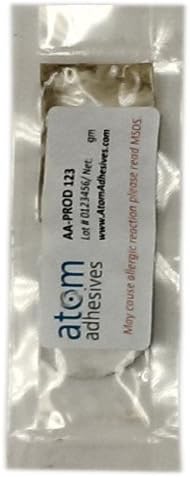
AA-Duct 906 is a low-volume, electrically conductive silver epoxy intended for electronics applications where a conductive bond is required. Its 3.7 rating is the lowest in this selection, but the product's core function is specific and clearly defined. It is not competing with flexible screen glue, conformal silicone, or thermal compound; it is intended to create an electrically conductive connection.
We may earn a commission when you buy through this link, at no additional cost to you.
The kit uses a single-use pouch, which simplifies mixing and reduces waste for small repair batches. Once combined, the epoxy has a one-hour working time and hardens at room temperature in 24 hours. It bonds well to glass, metals, fabrics, wood, and many other substrates, a broad compatibility range that can be useful when the exact material mix is varied across a repair bench.
Buyers should note the product's low rating and the absence of a stated volume resistivity or detailed cure profile. Silver-filled epoxy can become expensive or difficult to rework, and its mechanical properties should not be assumed to match those of a flexible consumer adhesive. The listing states that AA-Duct 902 offers greater conductivity, so users with demanding electrical performance should consult the product line and technical data before choosing 906.
This adhesive is best for occasional, low-volume conductive repairs, prototypes, and hobby electronics work where a single-use package is convenient. It is not the natural choice for bonding displays, waterproofing a phone housing, or transferring heat from a processor. Confirm that the repaired joint will not carry excessive current or heat, and verify all handling and safety instructions before use.
The silver epoxy formulation creates an electrically conductive joint, while the single-use pouch simplifies metering and cleanup for small jobs.
After mixing, the adhesive offers one hour of working time but requires roughly 24 hours to harden at room temperature. Components should remain aligned throughout that period.
We may earn a commission when you buy through this link, at no additional cost to you.
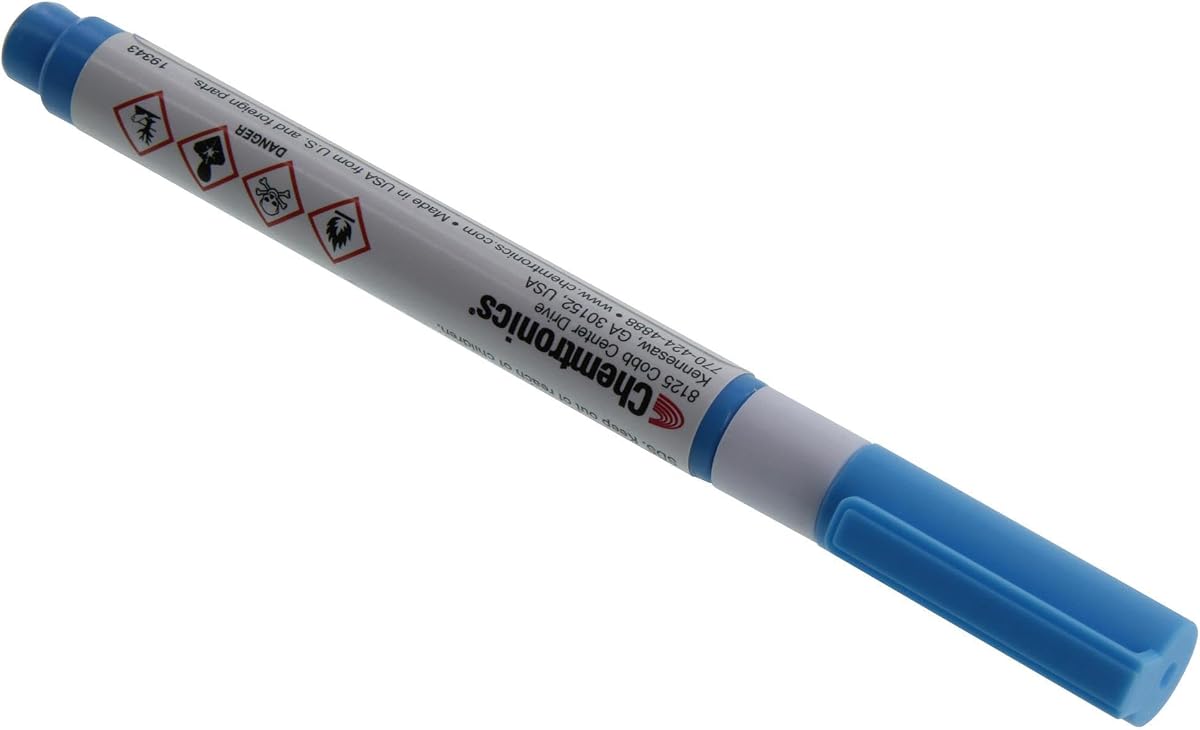
CHEMTRONICS CW2000 is a gray, nickel-conductive acrylic adhesive supplied in a 9-gram package. Its 4.5 rating places it among the more favorably reviewed products in this guide. The key distinction is the combination of acrylic chemistry with nickel-based conductive material, making it a candidate for small electronics assemblies that need a conductive adhesive rather than a general-purpose glue.
We may earn a commission when you buy through this link, at no additional cost to you.
The package includes a dispenser and tools, which reduces the need to source basic application equipment separately. A small quantity is also useful for laboratory, prototyping, repair, or rework tasks where a larger container would be likely to waste material. The gray color can make the deposited adhesive easier to see than a fully transparent product during controlled assembly.
The supplied listing is very brief and does not state electrical resistivity, conductivity, cure time, temperature range, or detailed substrate compatibility. It also does not explain whether the nickel material is intended for signal-level connections, shielding, grounding, or another application. Those missing specifications make this a product to evaluate with technical documentation rather than select solely by its category label.
CW2000 is best considered for users who specifically require a nickel-conductive acrylic and value the included dispenser and tools. It is not the right product for heat-transfer interfaces, clear cosmetic repairs, or broad waterproof sealing. Confirm the intended electrical load, application environment, and material compatibility before using it in a permanent or safety-critical assembly.
Nickel-based conductive acrylic is a different proposition from silver epoxy and thermal silicone. The inclusion of a dispenser supports controlled use in small conductive assembly work.
The 9-gram quantity limits waste while providing enough material for repeated bench tasks. Technical requirements should still be confirmed because the retail listing does not quantify electrical performance.
We may earn a commission when you buy through this link, at no additional cost to you.
The right adhesive depends on the job being performed, the materials involved, and the operating environment. A thermal interface compound, conductive epoxy, flexible repair glue, and protective silicone may all be called electronic adhesives, yet they perform fundamentally different functions.
Choose the product that directly matches the primary requirement rather than assuming a general electronics adhesive can perform every task. A thermal bond should be evaluated by heat-transfer data, while an electrical bond requires conductivity or resistivity information.
Do not infer conductivity from a color, product name, or marketing phrase. Verify the electrical specification and keep conductive adhesive away from unintended terminals and signal paths.
For a processor, use only a compound approved for that interface. For other supported chips, consider bond thickness, contact area, thermal cycling, and whether the cooler must be removable.
Allow the full stated cure before stressing, powering, heating, or immersing the repaired assembly. Faster handling requirements may favor a product with a longer positioning window.
Match the adhesive's stated environmental limits to the device's expected conditions. If no limits are published, request technical documentation or test a representative sample before committing.
For visible or crowded assemblies, use the narrowest practical applicator. For hidden thermal joints, prioritize even placement, correct thickness, and stable alignment during curing.
Clean the surfaces and confirm compatibility before full application. Never assume that two plastics, plated metals, or rubber surfaces will behave like the material used in the listing examples.
A stronger bond is not automatically a better bond. Choose a product that can be removed safely when future service is likely, especially around processors, displays, and densely packed boards.
Begin with a clean, dry workspace and disconnect power to the device whenever the repair permits it. Remove dust, oil, flux residue, old adhesive, and loose material from the bonding surfaces. Keep nearby components protected from squeeze pressure, and test the adhesive on a small inconspicuous area when compatibility has not been established. Good preparation does more to create a reliable joint than any increase in the amount of glue applied.
Dispense the smallest practical amount through the recommended nozzle or tube opening. Precision adhesives should be placed directly at the intended bond line, while thermal compounds need even coverage between the component and heatsink without excessive thickness. Align the parts immediately, hold them in position, and avoid disturbing the joint during the product's stated setting period. Full cure can take considerably longer than the initial set, so do not power, heat, or mechanically load the assembly prematurely.
After curing, remove only removable overflow and inspect the joint for gaps, movement, or incomplete coverage. Close precision bottles after use and store them within the manufacturer's stated conditions. For a T8000 product, that means keeping it within the listed storage range and allowing up to 48 hours for best adhesion. For thermal bonds, avoid repeated disassembly unless the adhesive was specifically designed for that purpose, and replace any compound that has separated, contaminated, or exceeded its expected service conditions.
A thermal adhesive designed for the specific component is preferable to general-purpose glue. The Easycargo products are intended for supported GPUs, VRMs, VRAM, MOSFETs, LEDs, chips, and Peltier modules. One explicitly states that it must not be used between a CPU and heatsink, so always follow component-specific guidance.
It is usually a poor choice because ordinary cyanoacrylate can be brittle, difficult to remove, and unsuitable for heat transfer. Electronics-specific silicone or precision adhesives are more appropriate when their electrical, thermal, and material properties match the repair. Avoid bridging unintended contacts and verify the product instructions first.
No. Conductive silver and nickel epoxies are formulated to carry an electrical path, while many silicones, thermal glues, and precision repair glues are intended to insulate. One thermal product is labeled conductive but explicitly described as electrically non-conductive, so read the full specification rather than relying on its name.
A waterproof or water-resistant adhesive does not automatically mean the repaired device is safe to immerse. Sealing gaps, connectors, vents, and damaged housings can affect the original water-resistance design. For a waterproof device, professional servicing and component-specific instructions are preferable to improvised sealing.
Follow the product's full cure instruction rather than its initial handling time. In this selection, stated periods range from approximately 30 minutes for a thermal adhesive to 24 hours for several repair and conductive products, while the T8000 kit recommends up to 48 hours for its best adhesion. Avoid heat, impact, and electrical load during that period.
Removal depends on the adhesive and the surfaces involved. Flexible consumer glues may peel or trim from some areas, while permanent thermal bonds and conductive epoxies can be difficult to separate cleanly. Protect nearby components, avoid aggressive scraping, and use a method approved for the device and adhesive rather than assuming the bond will detach easily.
Silicone sealant primarily protects, seals, and insulates electronics. Thermal glue is intended to transfer heat while securing a heatsink or other thermal component. Although both are often sold as adhesives, using one in place of the other can leave a component inadequately cooled or create unnecessary permanent bonding.
They improve control but do not guarantee safe use. Excess glue can still flow under pressure, coat contacts, or block openings. Disconnect the device, work slowly, apply a small amount, and confirm that the adhesive is suitable for the surrounding materials and operating temperature.
The strongest overall choice for versatile repair work is the T8000 clear precision kit because it combines the highest listed rating, several container sizes, a needle applicator, and useful repair tools. The Easycargo Thermal Glue stands out for affordable heatsink retention, while the ASI 388 electronic silicone is a more production-oriented option for sensitive materials and low-odor neutral curing.
Prioritize the function before the label. Choose a thermal compound for supported heat-transfer applications, a silver or nickel conductive adhesive when an electrical path is required, a silicone for protection and sealing, and a flexible precision glue for phones, displays, speakers, and general component repair. Cure time, temperature limits, electrical behavior, and substrate compatibility should all influence the final selection.
Finally, check the current listing details before buying. Product formulations, packaging, ratings, and availability can change, and prices fluctuate over time. The information in this guide reflects the supplied product data and is intended to simplify product selection, not replace the manufacturer's safety instructions or the service guidance for a particular electronic device.