
JOYO Guitar Audio Interface MOMIX CAB
4.2Editor score
Direct mobile guitar monitoring
USB-C and Lightning connectivity
Pocket-sized clip-on design
Explore audio interfaces for guitar, comparing inputs, monitoring, resolution, connectivity, software, and portability to help you choose the right model.
An audio interface for guitar turns your instrument into a dependable recording source, whether you are tracking through a laptop, rehearsing with headphones, producing vocals, or connecting to an amplifier and pedalboard. The right model balances clean conversion, low-latency monitoring, flexible connections, and a setup that suits your recording environment.
This guide compares ten options across instrument inputs, microphone capabilities, headphone monitoring, resolution, computer compatibility, direct monitoring, bundled software, portability, and expansion potential. It includes dedicated guitar interfaces, mobile adapters, compact home-studio units, and a more advanced interface for expanding production systems.
The recommendations reveal where each product fits: the Focusrite Scarlett Solo 3rd Gen offers a polished desktop workflow, the JOYO MOMIX CAB targets mobile practice, and the Arturia MiniFuse 1 provides a broad creative toolkit. Product availability and prices can change, so confirm current details before purchasing.
4.2Editor score
4.6Editor score

The table below compares the featured interfaces by their primary connections, monitoring features, recording resolution, and best-fit recording environment.



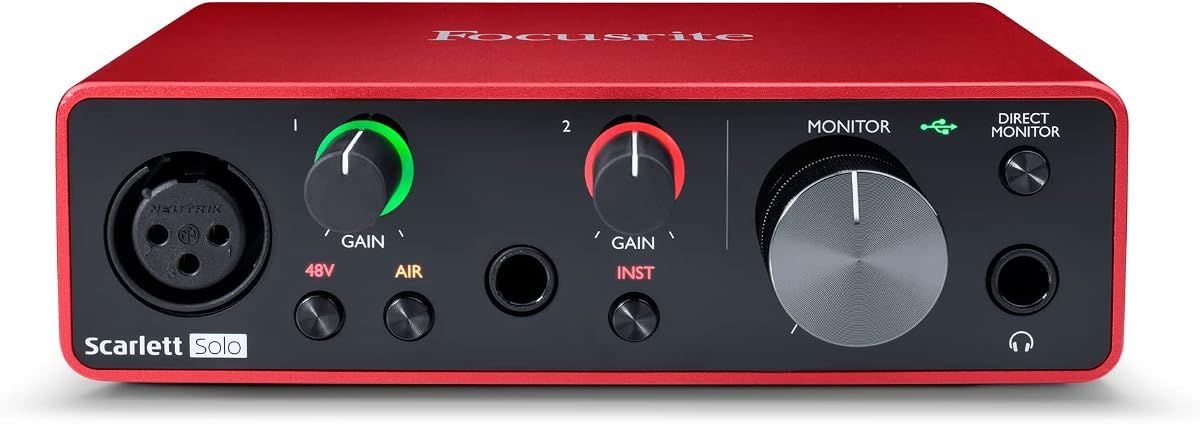
The Focusrite Scarlett Solo 3rd Gen is a strong all-purpose choice for guitarists who want a dependable desktop recording setup. Its 4.6 rating reflects a well-established product with a useful combination of high-headroom instrument inputs, clean conversion, balanced outputs, and an easy USB-C workflow.
We may earn a commission when you buy through this link, at no additional cost to you.
Two instrument inputs make it particularly suitable for recording electric guitar, bass, or a second amplified source at the same time. The preamps are designed to provide headroom without clipping, while the switchable Air mode can add brightness to recordings. Conversion up to 24-bit/192kHz supports high-resolution projects, and the low-noise balanced outputs help maintain a clean playback path.
Its limitations are mostly about scope. It is intended as a focused home-studio interface rather than a complex routing hub, and it does not offer the digital expansion or extensive re-amping section of the Fender Quantum HD 2. Buyers also need a computer because its primary workflow is USB-based rather than phone-first.
This is the most versatile recommendation for a guitarist starting a home studio, adding vocals, or upgrading from a basic computer sound card. It combines an approachable layout, credible recording specifications, and a generous software bundle without requiring a large or complicated system.
The two high-headroom instrument inputs are the Scarlett Solo's defining advantage for guitarists. Gain Halos provide a visual indication of signal level, helping users set an appropriate input level and reduce the chance of distorted or clipped recordings.
The package includes Pro Tools Intro+, Ableton Live Lite, Cubase LE, and the Hitmaker Expansion suite. These tools cover recording, arranging, effects, instruments, and mastering, giving new users a practical path from first take to finished session.
We may earn a commission when you buy through this link, at no additional cost to you.
The JOYO MOMIX CAB is a specialized mobile solution for guitarists who want to record or practice through a phone without carrying a conventional desktop interface. Its 4.2 rating suits a straightforward device whose strongest advantages are portability, plug-and-play operation, and direct instrument monitoring.
We may earn a commission when you buy through this link, at no additional cost to you.
The 6.35mm guitar input feeds a direct path to the 3.5mm headphone output while the signal is also sent to the phone for recording. A green indicator indicates a clean input, while a red warning signals that the level is too hot. Because the dry signal cannot be muted, the device is designed for recording clean guitar takes rather than real-time software amp simulations or effect processing.
This specialized behavior is an important limitation. The MOMIX CAB is not a general-purpose replacement for a Mac or PC audio interface, nor is it intended to deliver a processed software signal through its headphones. It also requires the included USB-C cable, and Android users may need to enable OTG. Device compatibility varies, although testing was confirmed with an iPhone, Google Pixel, and Samsung.
Choose the MOMIX CAB for song ideas, rehearsal, mobile recording, and social video. It is a practical choice for someone who values freedom from a desk setup more than multichannel recording, advanced routing, or a large collection of connections.
The direct monitoring path provides the guitar signal in the headphones while the phone receives the same input for recording. That makes the MOMIX CAB useful for quick practices and demonstrations where immediate playback is more important than a full production signal chain.
No batteries, charging process, or driver installation are required. The illuminated signal indicator gives useful guidance at a glance, while the back clip and pocket-sized body make the adapter easy to carry between rehearsal spaces, lessons, and recording sessions.
We may earn a commission when you buy through this link, at no additional cost to you.
The M-Audio M-Track Duo is a versatile entry point for guitarists who want to record more than a single instrument. Its 4.4 rating and two-input layout make it well suited to projects combining electric guitar, bass, vocals, microphones, or line-level sources.
We may earn a commission when you buy through this link, at no additional cost to you.
Both input sockets accept XLR, line, or instrument signals, with phantom power available for compatible condenser microphones. The output section includes a quarter-inch headphone connection and stereo quarter-inch line outputs. A USB/Direct switch provides a path to monitoring without the perceived delay associated with software round trips.
Its main technical limitation is 48kHz resolution. That remains perfectly usable for many recordings, but it is less demanding than the 96kHz and 192kHz options found elsewhere in this list. The bundle also centers on MPC Beats rather than providing a similarly broad set of traditional recording applications.
The Duo is a sensible choice for a guitarist building a small project around a laptop. It offers more connection flexibility than a single-input model and remains approachable for people who plan to add vocals, microphones, stereo sources, or live streaming.
The combo connections accept instrument, line, and microphone signals, reducing the need for additional adapters. This flexibility makes the interface useful for quick demos, podcast-style production, and basic recordings that involve more than one source.
Separate headphone and stereo line outputs give users a choice between private monitoring and playback through larger speakers. The direct switch is useful when latency needs to be minimized during practice or performance.
We may earn a commission when you buy through this link, at no additional cost to you.
The IK Multimedia iRig USB is designed for guitarists who want a familiar computer interface in a highly portable form. Its 4.3 rating reflects a versatile platform that supports Mac, PC, and USB-C-equipped mobile devices while preserving familiar instrument-level recording controls.
We may earn a commission when you buy through this link, at no additional cost to you.
It records at up to 24-bit/48kHz and includes direct monitoring for silent practice. The Amp Out can feed a guitar amplifier or pedal rig, with selectable FX and THRU modes. This output makes the interface more versatile than a basic direct-recording adapter because it can participate in an existing signal chain.
The important compatibility restriction is the absence of Lightning support. The supplied product information specifically states that it will not work properly with a Lightning cable, so users of older iPhone or iPad connectors should not assume universal compatibility. Its single-instrument emphasis also offers less flexibility than a two-channel desktop model.
The iRig USB is most attractive to a guitarist working across a Mac, PC, and compatible USB-C device. It suits mobile songwriters, travelers, and performers who want one compact adapter for direct recording, silent practice, and connection to an amplifier or pedalboard.
Support for Mac, PC, and iPad broadens the potential uses of the interface. A guitarist can move between a home computer and a compatible mobile setup without maintaining a separate adapter for each environment.
The Amp Out and selectable FX or THRU operation are particularly useful for electric guitarists. Users can send the recorded or monitored signal into an amplifier and pedals, preserving more of their familiar playing setup than a direct recording-only adapter.
We may earn a commission when you buy through this link, at no additional cost to you.
The MAONO PS22 Lite combines guitar recording, vocal capture, and streaming in a compact interface. Its 4.2 rating reflects a feature-rich design aimed at users who want high-resolution recording and flexible routing without moving to a large professional console.
We may earn a commission when you buy through this link, at no additional cost to you.
Recording up to 24-bit/192kHz with a stated dynamic range of 106dB gives the interface a strong technical foundation. The XLR input supports condenser and dynamic microphones, offers up to 56dB of preamp, and includes 48V phantom power. For guitar, a dedicated instrument input and adjustable impedance help users shape the interaction between pickups and the preamp.
Included ProStudio Routing Software adds virtual channels and loopback functions, while ASIO support can improve low-latency operation. The interface also provides intuitive modes for recording, broadcasting, and instruments. These features are useful, but users must select the MAONO ASIO driver in their software for proper routing.
The PS22 Lite is a good fit for a guitarist who also records vocals or streams. Its high-resolution converters, microphone support, and monitoring controls give it more breadth than a single-purpose instrument adapter, although beginners should budget time to understand the routing options.
The dedicated instrument path includes impedance adjustment, an important detail for electric guitarists. Matching the input to the instrument can help preserve a natural balance between the guitar and preamp while giving the recording a more controlled starting point.
Loopback routing and virtual channels make the interface useful when a performance, backing track, or commentary must be combined for online broadcasting. The included routing software provides more control than a basic switch-only monitoring design.
We may earn a commission when you buy through this link, at no additional cost to you.
The PIYONE Q28 2X2 is a modern two-channel interface that balances compact construction with high-resolution recording. Its 4.3 rating makes it a credible option for guitarists who want combo inputs, direct monitoring, and broad computer compatibility in a streamlined package.
We may earn a commission when you buy through this link, at no additional cost to you.
The two XLR/TRS combo inputs can handle microphones or instruments, with the Hi-Z path intended for guitar. Recording up to 24-bit/192kHz is supported, and fixed LED rings around the gain controls make the interface easier to operate in dim conditions. Integrated phantom power supports condenser microphone use.
A major convenience is its class-compliant USB-C operation. The product information says no additional drivers are required, which can simplify setup on compatible Mac and PC systems. The main constraint is its more limited output selection, including a 3.5mm headphone connection rather than a full range of balanced studio outputs.
The Q28 is best for a guitarist who wants a small two-input setup for instruments and vocals, particularly when balanced line outputs are not essential. Its clean direct-monitor function and straightforward connection make it practical for quick sessions and compact home studios.
The combo design allows microphones, line sources, and electric instruments to share the same two input channels. That makes the interface flexible for solo guitar work, guitar and vocal combinations, and quick two-source sessions without requiring extra input hardware.
USB-C handles both data and bus power, eliminating a separate external supply in compatible setups. The direct-monitor control helps users hear their instrument while recording, and the compact format simplifies movement between rooms.
We may earn a commission when you buy through this link, at no additional cost to you.
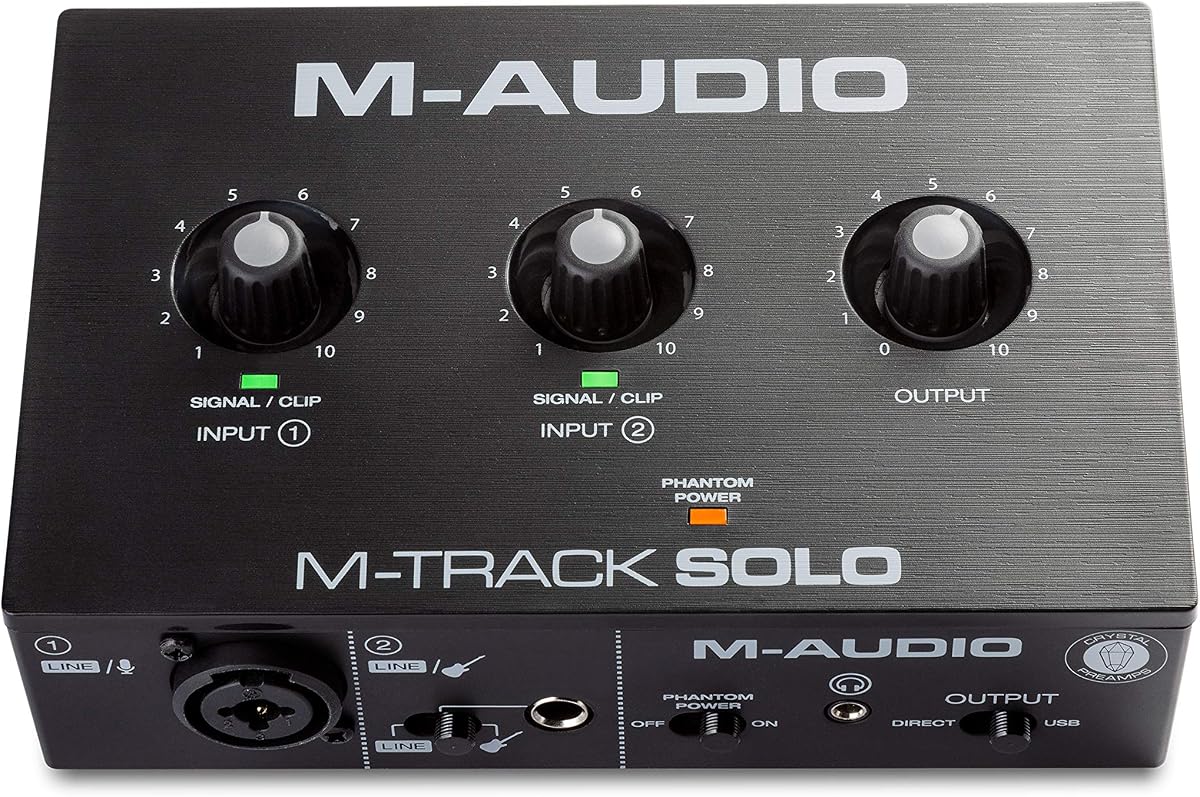
The M-Audio M-Track Solo is a straightforward starting point for a guitarist who primarily records one instrument at a time. Its 4.3 rating and single-input configuration make it easy to understand while still providing microphone, line, and instrument options.
We may earn a commission when you buy through this link, at no additional cost to you.
The main input accepts XLR, line, or instrument signals and supports phantom power, while a separate line and instrument input offers another way to capture sources. Monitoring is available through a small headphone output and stereo RCA outputs. The USB/Direct switch allows users to choose between computer monitoring and direct monitoring.
Its single-channel recording focus means it cannot capture guitar and vocals simultaneously. The 48kHz specification is also less advanced than several high-resolution alternatives. For a solo guitarist, these limitations may not matter, particularly if the primary goal is clean tracking, rehearsal, or learning a home-studio workflow.
The M-Track Solo is a sensible choice for a beginner with a laptop, one guitar, and a need for simple monitoring. It delivers the essential connections without the added complexity of a two-channel routing system, while MPC Beats provides a starting point for music creation.
The single-input arrangement keeps the recording process approachable. A guitarist can connect a microphone or instrument, select the appropriate input, set the gain, and begin tracking without navigating a complex signal matrix.
A dedicated headphone jack supports private practice, while stereo RCA outputs allow connection to a conventional desktop system. The direct switch helps reduce monitoring delay during performance-oriented practice.
We may earn a commission when you buy through this link, at no additional cost to you.
The Arturia MiniFuse 1 is a compact interface with unusually broad creative tools, and its 4.6 rating places it among the strongest products in this guide. It suits guitarists who want high-quality recording, loopback capture, MIDI hardware, and a substantial software bundle in one package.
We may earn a commission when you buy through this link, at no additional cost to you.
The analog section includes a combo mic, instrument, and line XLR input with phantom power, plus two TRS instrument or line inputs. Balanced quarter-inch line outputs, a controlled headphone output, a USB hub, and five-pin MIDI input and output expand the possibilities beyond a basic guitar recorder. Loopback is useful for capturing application or game audio alongside another source.
MIDI support is unnecessary for a strictly acoustic or electric guitar workflow, and the broader connection set may be more than some beginners need. The primary trade-off is complexity relative to a minimal interface, although the controls remain designed for quick setup and the product includes tutorials and ready-made projects.
Choose the MiniFuse 1 for a compact home studio that may grow into electronic production, MIDI sequencing, voice recording, or content creation. It is especially attractive for a user who values bundled creative software and wants the option to connect more than a guitar.
Ableton Live Lite, Analog Lab Intro, Arturia FX, NI Guitar Rig 6 LE, Auto-Tune Unlimited, and a Splice Creator Plan cover production, synthesis, guitar sounds, vocal processing, and content. The package gives users materials to experiment with instead of beginning with an empty project.
Five-pin MIDI connections make the interface relevant to controllers, synthesizers, and drum machines. Loopback can capture external application or game audio, creating opportunities for videos, streams, and layered productions that a simple instrument adapter cannot handle.
We may earn a commission when you buy through this link, at no additional cost to you.
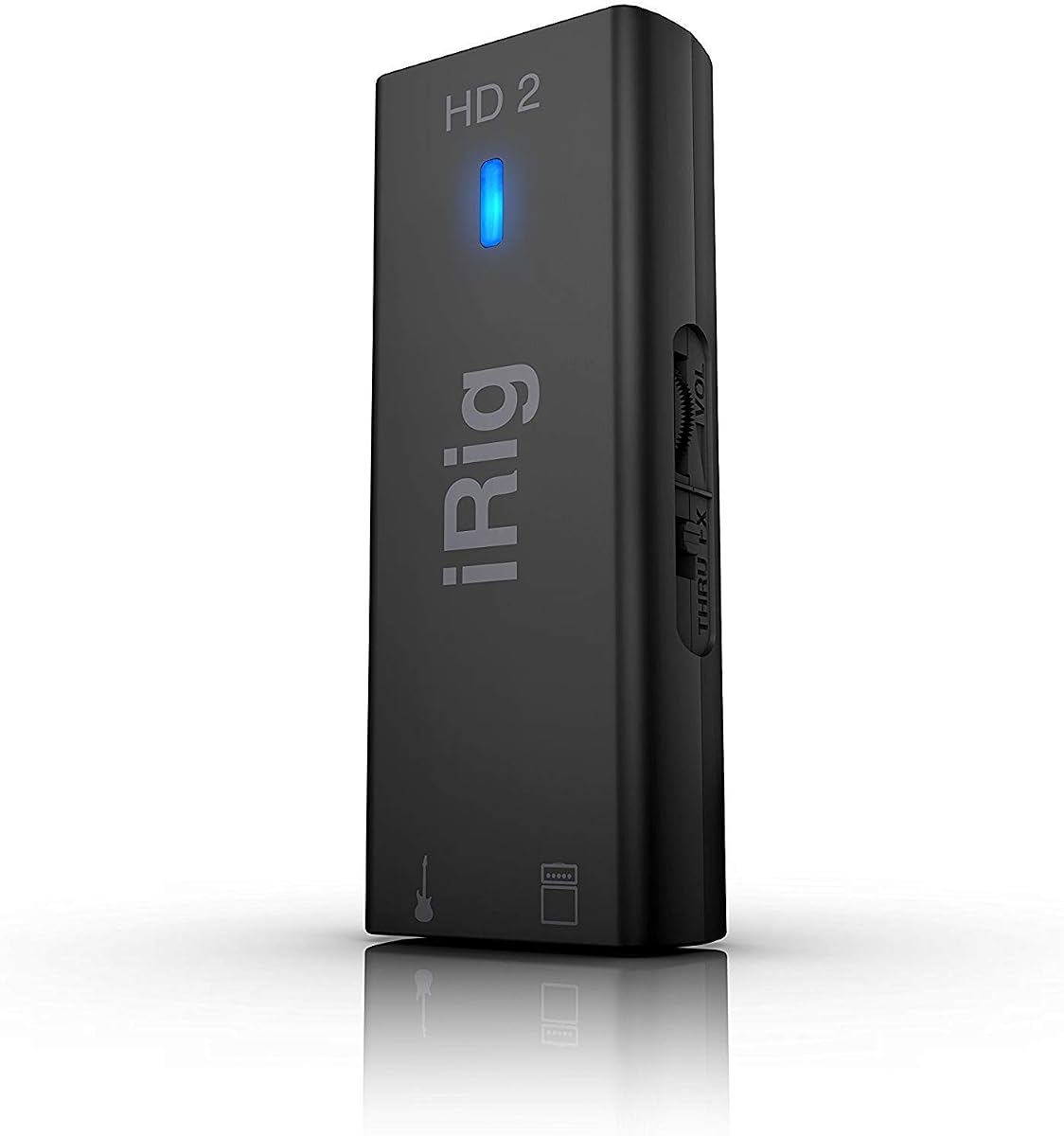
The IK Multimedia iRig HD 2 is a portable, guitar-focused interface with a 4.4 rating and support for iPhone, iPad, Mac, iOS, and PC. Its defining combination is a high-quality instrument input, headphone monitoring, and amp output with selectable processing modes.
We may earn a commission when you buy through this link, at no additional cost to you.
Recording at up to 24-bit/96kHz gives the interface more resolution than most basic mobile adapters. The input gain is adjustable, while the Amp Out can send a signal to an amplifier and pedal rig through either FX or THRU. The headphone output includes preamp and level controls for quiet practice, and the supplied USB-C, Lightning, and USB cables broaden platform support.
The interface is designed primarily around one instrument, so it does not provide the multi-input flexibility required for simultaneous guitar and vocal recording. It also carries a more traditional mobile-accessory design, with separate cables rather than a universal modern connector arrangement.
The iRig HD 2 is a strong choice for electric guitarists who move between phone, tablet, and computer. It is particularly useful for silent practice, mobile recording, and maintaining an amplifier-and-pedal workflow across compatible devices.
The Hi-Z input and adjustable preamp are designed around electric instruments rather than general-purpose line capture. That focus makes the interface suitable for guitarists who want a straightforward, predictable connection to a host device.
The monitored headphone path allows players to work without sending a loud signal through an amplifier. Output level control makes it easier to match comfortable listening levels during long practice sessions.
We may earn a commission when you buy through this link, at no additional cost to you.
The Fender Quantum HD 2 is the most advanced and expandable option in this guide. It is built for guitarists and producers who want studio-scale routing, front-panel instrument access, automatic level control, digital expansion, and dedicated re-amping outputs in a single desktop interface.
We may earn a commission when you buy through this link, at no additional cost to you.
Its 20-by-24 USB-C configuration and 32-bit/192kHz converters provide substantial capacity for a developing production system. MAX-HD microphone preamps support vocal capture, while front-facing instrument inputs are optimized for guitar and bass. Auto Gain establishes a suitable recording level with one action, and the dual re-amp outputs make it possible to route tracks back through an amplifier and pedals for new tones.
ADAT and S/PDIF connections add digital input and output options for expanding the system, while the DSP monitor mixer, loopback, and headphone amplification support monitoring and streaming. The included perpetual license for Fender Studio Pro and access to Fender amp and effects models make the software package especially relevant to electric guitar tone.
This is the right choice for a serious home studio that already includes microphones, amplifiers, pedals, monitors, and a complex production workflow. It may be excessive for someone who only needs to record a single guitar, but it offers the clearest long-term path to a professional, expandable system.
Auto Gain removes much of the guesswork from setting input levels. Guitarists can make a quick adjustment before a take, then spend more time on performance than on repeatedly checking conventional gain controls.
The dedicated re-amp outputs send previously recorded signals through an external amplifier and pedalboard. This makes it possible to revisit a clean take with different distortion, compression, cabinet characteristics, and effects rather than committing to one guitar tone during the initial performance.
ADAT and S/PDIF expansion provide routes for adding compatible outboard gear, digital preamps, or converters as a production system develops. The 20-channel layout also leaves room for microphones, instruments, playback, and external processing without relying on a single limited input configuration.
We may earn a commission when you buy through this link, at no additional cost to you.
Choose an audio interface by matching its input types, monitoring behavior, device compatibility, and software workflow to the way you record. Guitar signal quality matters, but the right interface is ultimately the one that fits your instruments, computer, and creative plans.
For a single-guitar setup, prioritize a clear instrument input and dependable gain control. For a room where vocals, drums, or other instruments will be added, two inputs provide a practical starting point without forcing a purchase into an unnecessarily large system.
Look for a clearly labeled direct monitor control and headphone output. Make sure the interface supports the connection type used by your headphones or existing studio monitors.
Prioritize at least 24-bit capture when possible. Match the sample rate to your project requirements and computer performance rather than assuming the highest advertised rate is automatically the best everyday choice.
Check the operating system, port, included cable, and driver requirements before buying. For a phone-first workflow, favor an interface explicitly designed and tested for that device rather than assuming a desktop adapter will behave identically.
For a focused home studio, seek at least one excellent instrument input, one microphone-capable input, and a headphone output. Choose more channels and digital expansion only when your existing equipment can use them.
Check the included applications, their activation requirements, and whether they fit your chosen operating system. Treat software as part of the interface's workflow, but verify that the hardware and routing meet your needs independently.
Choose a clip-on mobile adapter for recording ideas and practice, or a sturdy desktop interface for regular production. Make sure the controls and indicators remain easy to see and use in your normal workspace.
Buy for a realistic path rather than every hypothetical future need. Confirm that the interface supports the types of external equipment you already own or are likely to buy soon.
Begin by connecting the interface to the computer before opening the recording application, then allow the operating system to recognize it. Select the correct input and output in the DAW, confirm the sample rate and bit depth, and set the monitoring mode. For a direct-guitar signal, begin with the instrument volume and interface gain at low levels, play a strong chord, and raise them gradually while watching the input meter.
For recordings involving an amplifier, decide whether the DAW should capture a clean input, a processed amplifier signal, or both. Route the appropriate output to the interface, use headphones to prevent feedback, and keep the signal well below clipping. When direct monitoring is active, remember that software effects may not be audible in the headphones if the interface is set to pass only a dry signal.
Keep the unit dry, protect its connectors, and use the supplied or approved cable when one is specified. Secure the interface to prevent strain on ports, close unused inputs, and avoid abrupt volume changes. Store mobile adapters in a protective case, clean headphones and instrument plugs regularly, and update required software and firmware when the manufacturer provides compatible versions.
A dedicated interface is strongly recommended for electric guitar because it provides a proper instrument-level input, clean conversion, low-latency headphone monitoring, and balanced connections. A computer's built-in audio input is usually designed for microphones and line sources and may not handle a guitar's impedance correctly. An interface also makes it easier to connect monitors, microphones, pedals, and recording software consistently.
Most home recordings are perfectly practical at 48kHz, and 96kHz or 192kHz can provide additional detail and headroom for editing. The higher rates create larger files and increase processing demands, so your computer must be able to manage the session comfortably. Choose a rate that your DAW and monitoring system support reliably rather than selecting the highest number without considering workflow.
Yes, especially for amp simulation, performance, and low-latency practice. Direct monitoring routes the guitar signal without waiting for it to travel through the computer and return, which makes the sound more immediate. The interface should clearly distinguish its direct path from software monitoring, since plugging into headphones does not automatically mean every effect or virtual amplifier is being heard in real time.
Yes, but you need an interface with enough suitable inputs. A two-channel model with one microphone-capable input and one instrument input can handle a basic guitar-and-vocal session, while two combo inputs provide more source flexibility. Check whether the input can accept XLR microphones, line equipment, and instruments, and confirm that the supplied software supports your intended routing.
A USB audio interface is designed primarily for a computer and usually provides stronger conversion, more inputs, direct monitoring, and output flexibility. A mobile guitar adapter prioritizes compactness, phone connectivity, and an extremely simple recording path. Mobile adapters can be excellent for ideas and practice, while desktop interfaces are usually better for full productions involving editing, effects, instruments, and multiple sources.
Many modern USB interfaces receive power directly from the computer through USB-C or another bus-powered connection. Some devices with many inputs, high-end preamps, or external displays may use a separate power supply, so check the included items and system requirements. A bus-powered unit is convenient for a mobile or laptop-based setup, while separate power can be useful for a permanently installed studio system.
MIDI is valuable if you use a controller, synthesizer, pad, or electronic drum machine, but it adds little to a strictly acoustic or electric guitar recording setup. A guitarist producing electronic music or a broader home studio may prefer a model with MIDI, while a simple player can prioritize instrument input quality, headphone monitoring, and software instead.
Yes, provided the interface has a suitable output and the amplifier accepts that connection at the appropriate level. The IK Multimedia models highlighted in this guide include an Amp Out with processed or direct options, making them especially relevant to pedal and amplifier workflows. Use headphones or proper isolation to prevent feedback, and confirm the signal level before switching the amplifier on.
The Focusrite Scarlett Solo 3rd Gen is the strongest general recommendation for a polished home-studio workflow, while the JOYO MOMIX CAB serves a very different need as a compact mobile recorder and direct-monitor adapter. The Arturia MiniFuse 1 stands out for creative software, MIDI, loopback, and flexible connections, and the Fender Quantum HD 2 leads the advanced end with extensive routing and expansion.
Prioritize a clean instrument input, reliable low-latency monitoring, and compatibility with the device where you will actually record. Additional resolution, microphone preamps, MIDI, digital expansion, and re-amp outputs are valuable when they support a current project, but they should not distract from the need for a clear and dependable guitar signal.
Before purchasing, confirm the connector, operating system, software requirements, output format, and included accessories. Product features and prices can change, so checking the current listing and recent customer feedback will help ensure that the chosen interface still fits your setup when you are ready to record.