
DJI Mini 4K
4.5Editor score
Under 249 g weight
4K UHD stabilized video
GPS return-to-home support
A lightweight DJI drone makes it easier to travel, launch spontaneously, and capture polished aerial footage without carrying a bulky aircraft. The best models balance low weight with stabilized cameras, intuitive controls, dependable obstacle sensing, and enough battery life for a satisfying flight.
We compared all ten products by examining their listed weight, camera hardware, stabilization, flight time, transmission range, safety systems, tracking features, portability, and included accessories. The list covers ultra-compact drones for casual creators as well as advanced models for demanding travel and professional work.
Each pick reveals a different way to approach lightweight flying, from controller-free convenience to advanced imaging and extended battery bundles. Product details and availability can change, so verify the current listing, included components, local rules, and app compatibility before making a purchase.
4.5Editor score

4.4Editor score
4.6Editor score
As an Amazon Associate we earn from qualifying purchases.
This side-by-side comparison highlights each aircraft's weight, imaging system, safety features, flight characteristics, and ideal use case, making it easier to identify the right lightweight DJI drone for your experience and creative priorities.




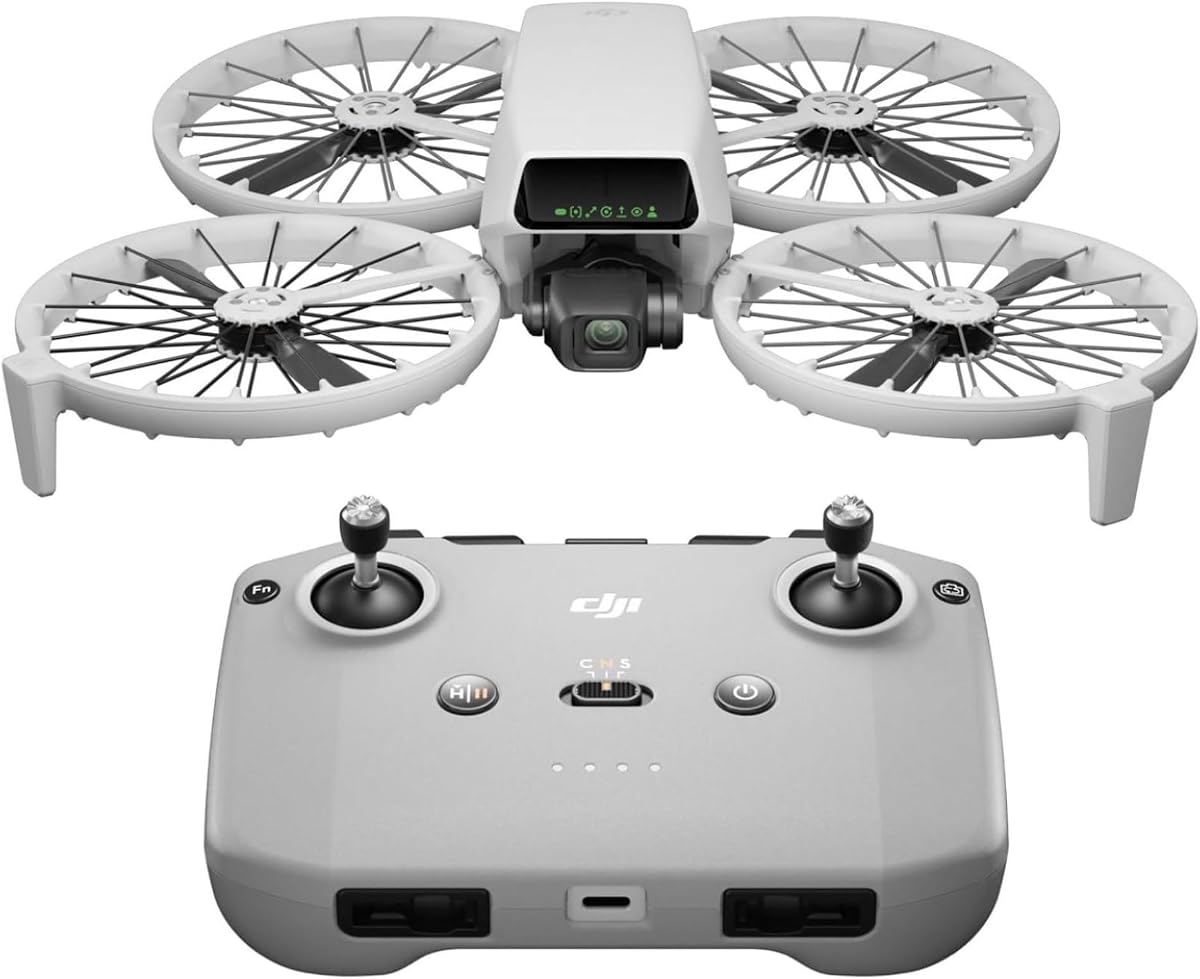
The DJI Mini 4K is a compelling entry point for travelers, beginners, and casual creators who want a genuinely easy-to-carry drone with a stabilized 4K camera. Its listed rating is 4.5, and the specification sheet emphasizes a weight below 249 grams, a three-axis gimbal, GPS return-to-home, stable hovering, and a straightforward controller experience.
We may earn a commission when you buy through this link, at no additional cost to you.
Its main advantage is the combination of a capable gimbal and approachable controls. The Mini 4K records 4K ultra-high-definition footage, while brushless motors and claimed resistance to Level 5 winds support steadier flights outdoors. QuickShots including Helix, Dronie, Rocket, Circle, and Boomerang give new pilots access to moving-camera compositions without requiring advanced piloting skills.
The main limitation is that this is a basic imaging platform rather than a premium cinematography drone. Its camera is smaller than the one-inch sensors found in the Mini 5 Pro, and the listed feature set does not include advanced omnidirectional obstacle detection. Pilots still need to maintain line of sight, choose open areas, and account for obstructions, especially near buildings, trees, or other aircraft.
This model suits buyers who value portability, stable footage, and straightforward operation more than professional low-light quality or automated collision avoidance. Buyers can select one-, two-, or three-battery configurations according to how often they expect to fly. Overall, it is the strongest budget-oriented choice in this guide and one of the most practical options for learning aerial photography.
At under 249 grams, the Mini 4K avoids the bulk associated with many camera drones. Its compact format, simple controls, and assisted flight features make it particularly approachable for short trips, family outings, and spontaneous outdoor shooting.
The three-axis gimbal is a major step up from an unstabilized toy camera. It helps smooth walking movement, gentle turns, and moderate wind, while the supported QuickShots modes automate several recognizable cinematic patterns.
We may earn a commission when you buy through this link, at no additional cost to you.
The DJI Mini 5 Pro is the most complete lightweight option in this guide, combining a near-249-gram weight with a one-inch CMOS sensor, advanced safety systems, flexible shooting formats, and 42GB of internal storage. Its 4.4 rating reflects a feature set that is unusually ambitious for a drone this small and portable.
We may earn a commission when you buy through this link, at no additional cost to you.
The imaging system is its clearest advantage. It can record 4K HDR video at 60fps, while a gimbal offering true vertical filming and 225 degrees of roll rotation gives creators flexibility for landscapes, social content, and unusual perspectives. Forward-facing LiDAR and vision sensors provide omnidirectional obstacle sensing, and upgraded ActiveTrack 360° supports customizable subject tracking.
The compromises are practical rather than fundamental. The standard package includes only one battery, so extended production work usually benefits from additional batteries. The feature set can also feel more complex than a basic Mini or Neo model, particularly for a first-time pilot. Night operation may require local permits, and buyers must download the compatible DJI Fly app through the official website.
This is the strongest recommendation for a creator who wants serious camera performance without moving to a much larger or heavier aircraft. It also suits travel videographers who value automatic tracking and obstacle awareness. For buyers who only need simple 4K clips, the Mini 4K may deliver a more streamlined experience, but the Mini 5 Pro offers the best balance of image quality, portability, and intelligent features.
The one-inch sensor is the key reason to consider this model over entry-level mini drones. It provides a stronger foundation for fine detail, color, dynamic range, and low-light results, while 4K HDR capture preserves more information in bright skies and shadowed scenery.
LiDAR and vision-based obstacle sensing add confidence around trees, buildings, and during return-to-home sequences. ActiveTrack 360° reduces the need to manually frame moving people or cyclists, making the aircraft particularly useful for active travel content.
We may earn a commission when you buy through this link, at no additional cost to you.
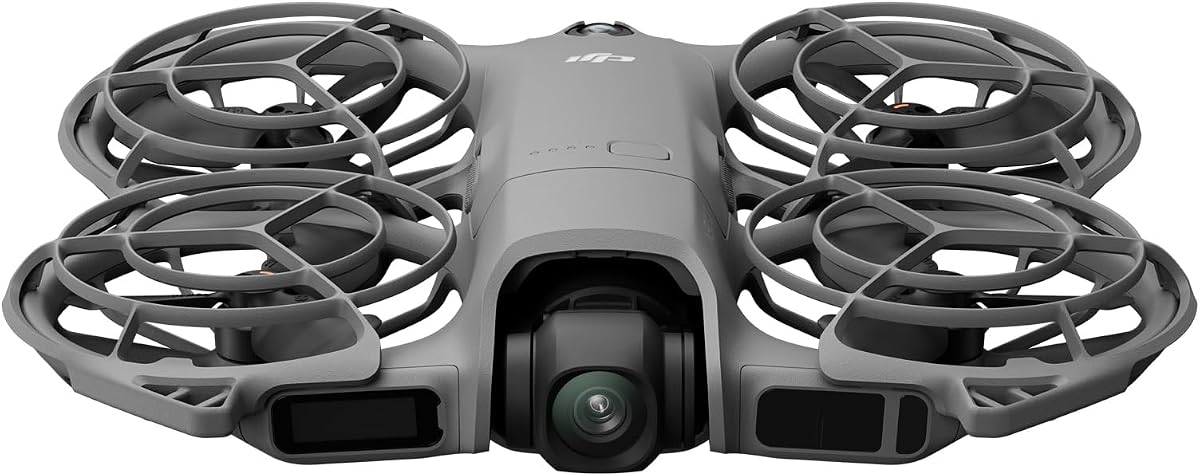
The DJI Neo 2 is the standout ultra-compact model here, weighing just 151 grams and earning a 4.6 rating, the highest numerical rating among the listed drones. It is designed for people who want to capture 4K footage without carrying a conventional controller or worrying much about exposed propellers.
We may earn a commission when you buy through this link, at no additional cost to you.
Palm takeoff and landing make the aircraft approachable even for users with limited flight experience. Gesture controls, ActiveTrack, and SelfieShot add hands-free convenience, while omnidirectional obstacle sensing provides a more reassuring safety foundation than many very small recreational drones. Full-coverage propeller guards also make it better suited to close-range family and social filming.
The tradeoff is that this listing is drone only, and the package is not positioned like a professional cinematography kit. Although it supports 4K-quality capture, the Mini 5 Pro offers a much larger sensor, more advanced gimbal movement, and superior low-light potential. The compact Neo 2 prioritizes spontaneity and ease over image quality and professional control.
Choose the Neo 2 if its small size is the decisive feature. It is a strong match for casual travel, parties, family memories, and quick social posts where palm launch and protective guards matter. Serious creators should instead prioritize the larger camera in the Mini 5 Pro, while first-time pilots seeking a conventional controller may prefer the Mini 4K.
Palm launch, landing, gestures, and selfie capture remove many of the barriers associated with conventional drone operation. These features are especially useful when the aircraft is your attention while you are spending time with family or friends.
Full-coverage propeller guards reduce the risk of contact with people and nearby objects. Omnidirectional sensing further improves confidence, although responsible operation and clear surroundings remain necessary regardless of the automated systems.
We may earn a commission when you buy through this link, at no additional cost to you.
The original DJI Neo remains an attractive option for buyers who prioritize the lightest form and controller-free operation. At 135 grams, it is one of the most portable entries in the guide, and its 4.4 rating reflects a capable package of automated features for casual filming and social content.
We may earn a commission when you buy through this link, at no additional cost to you.
You can launch it from your palm, control it with the mobile app, use voice control in supported languages, or add a conventional remote controller. Subject tracking keeps a person in frame, while eight QuickShots modes provide automated movement for short social clips. Its full-coverage propeller guards are a practical feature for flights around people and in confined areas.
Image quality is adequate for online sharing and casual memories rather than demanding commercial work. The listed features do not include the advanced omnidirectional sensing found in newer models, so pilots should avoid assuming automatic collision avoidance. Wind resistance is listed at Level 4, which is worth considering when planning outdoor flights in exposed locations.
The Neo works best for spontaneous, informal use where convenience matters more than manual camera control. It is a particularly good choice for families, travelers, and first-time pilots who want to record without learning a full dual-stick control system. Buyers wanting a larger sensor or longer flight time can step up to the Mini 4K or Mini 5 Pro.
The ability to fly controller-free removes a major source of intimidation. It also makes the aircraft convenient to carry, although a compatible phone or controller remains necessary for some functions and longer flights.
Subject tracking and eight QuickShots modes help create movement-focused footage without extensive piloting experience. These tools are well matched to parties, hikes, picnics, and other situations where the drone should follow the action.
We may earn a commission when you buy through this link, at no additional cost to you.
This DJI Mini 5 Pro Fly More Combo is aimed at buyers who want the capable Mini 5 Pro platform without assembling a long list of accessories. Its 4.4 rating aligns with the standard Mini 5 Pro, and the package is especially useful for creators who expect to fly several times per day or work away from convenient charging locations.
We may earn a commission when you buy through this link, at no additional cost to you.
The aircraft retains a one-inch CMOS sensor, 4K HDR video at 60fps, 50MP stills, 10-bit color options, and True Vertical Shooting. LiDAR and vision sensors support omnidirectional obstacle awareness, while ActiveTrack 360° assists with moving subjects. The included four-battery arrangement, charging hub, spare propellers, RC 2 controller, microSD card, backpack, and landing pad create a ready-to-travel package.
Its principal disadvantage is bulk. The extra batteries, controller, protection pack, backpack, and accessories make it less minimal than the standard Mini 5 Pro. A buyer who only flies occasionally may carry more equipment than needed, while extensive flying still requires disciplined battery rotation and responsible charging practices.
The bundle is a strong choice for dedicated travel creators, educators, real-estate shooters, and small production teams. It provides the accessories most likely to be needed soon after purchase, including several batteries and the RC 2 screen controller. For a simpler setup, the standard Mini 5 Pro is more travel-conscious; for this bundle, the organization and readiness are the main advantages.
Four intelligent flight batteries reduce interruptions during a full day of shooting. The charging hub and spare propellers further improve convenience, making the bundle more practical for travel than sourcing each item separately after an initial flight.
The one-inch sensor, 10-bit color support, D-Log M and HLG options, and 50MP stills provide considerable creative latitude. True Vertical Shooting and 225-degree gimbal rotation also make the aircraft useful for content designed specifically for social platforms.
We may earn a commission when you buy through this link, at no additional cost to you.
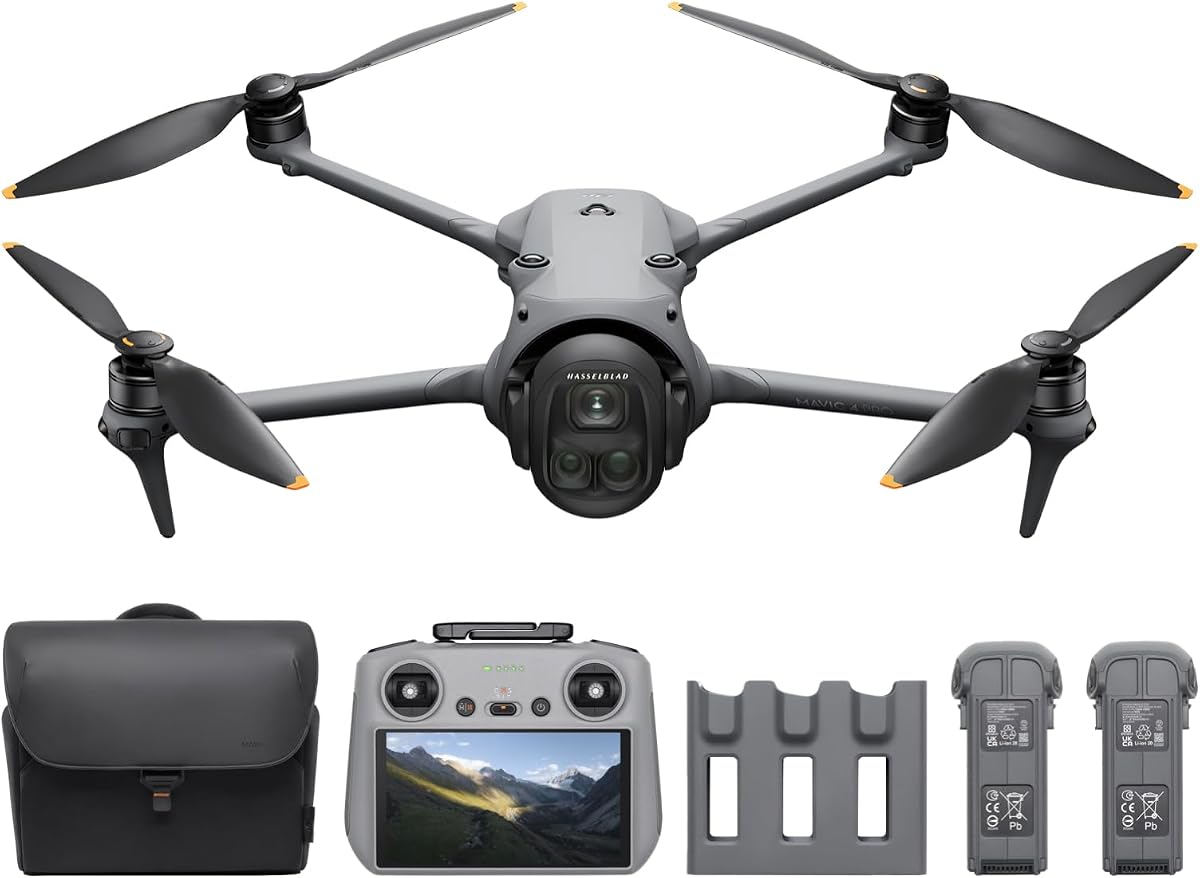
The DJI Mavic 4 Pro is the most advanced camera-focused drone in the guide, built around a 100MP Hasselblad main camera, dual tele cameras, and 6K HDR video at 60fps. Its 4.4 rating and extensive feature list position it as a flagship aerial imaging system rather than a basic lightweight travel drone.
We may earn a commission when you buy through this link, at no additional cost to you.
The camera configuration is its defining strength. A large main sensor captures high-resolution stills, while two telephoto modules offer different framing and zoom options without changing perspective entirely. A 360-degree infinity gimbal adds flexible motion, and 0.1-lux omnidirectional obstacle sensing is intended to improve safety in low-light conditions.
The bundle includes three batteries, a charging hub, and the DJI RC 2 controller. It also supports up to 51 minutes of flight and 30-kilometer O4+ video transmission with 10-bit HDR. These capabilities increase the size, complexity, and overall demands compared with the mini models. Flight planning, battery management, and careful attention to local regulations become even more important.
This is the right choice for experienced creators who need professional focal flexibility, high-resolution capture, and lengthy missions. It may also suit real-estate, commercial, and high-end travel work where image quality is the priority. Buyers seeking the lightest possible system should choose the Mini 4K, Mini 5 Pro, or Neo 2 instead, because the Mavic 4 Pro trades some portability for a much more advanced camera and flight platform.
The wide main camera handles landscapes and establishing shots, while the telephoto modules support tighter compositions and useful perspective changes. This flexibility is valuable when a flight location offers both broad scenery and distant details.
A listed 51-minute maximum flight time and long-range O4+ transmission make the Mavic 4 Pro suitable for extended production days. Low-light obstacle sensing and a large display controller improve operational confidence, although the advanced feature set requires deliberate setup and practice.
We may earn a commission when you buy through this link, at no additional cost to you.
The DJI Air 3S combines a 1-inch primary camera with a dual-camera system, extended flight time, and a three-battery bundle. Its 4.5 rating makes it one of the stronger all-around choices for travel creators who want more imaging flexibility and endurance than a basic mini model.
We may earn a commission when you buy through this link, at no additional cost to you.
The primary sensor records 4K HDR at 60fps and is said to preserve up to 14 stops of dynamic range, which is useful for sunrise, sunset, cloud detail, and difficult lighting. A second camera provides a different perspective, while wide-angle and medium-telephoto panorama modes expand the framing choices. Forward-facing LiDAR and other sensors support safer night flights.
The package includes the RC-N3 controller, three intelligent flight batteries, a charging hub, and an ND filter set. Maximum flight time is listed at 45 minutes, with 20-kilometer video transmission. A major practical consideration is that the battery charger is sold separately, so buyers should plan to add an appropriate charging solution.
The Air 3S is well suited to frequent travelers, filmmakers, and creators who want two perspectives without moving to a much larger tri-camera platform. It is less compact than the DJI mini and Neo families, but it offers a more mature balance of image quality, endurance, safety, and shooting flexibility.
The wide primary camera handles broad landscapes, while the additional camera enables tighter views. Changing perspectives without carrying a second aircraft can save time during a trip and make editing transitions more varied.
Three batteries and a listed maximum flight time of 45 minutes reduce the need for midday charging breaks. The smart return-to-home function is designed to choose an efficient route back, which adds convenience when the flight location has weaker GPS reception.
We may earn a commission when you buy through this link, at no additional cost to you.
The DJI Mini 3 Bundle packages a folding mini drone with several travel accessories. Its 3.8 rating is the lowest among the ten listings, but the underlying aircraft remains compact, capable, and equipped with a 1/1.3-inch sensor, 4K HDR recording, and a listed 38-minute flight time.
We may earn a commission when you buy through this link, at no additional cost to you.
The bundle includes the Mini 3, DJI RC remote, a 64GB memory card, sling backpack, landing pad, card reader, cleaning kit, and memory card wallet. That collection is useful for buyers who want a ready-to-fly setup rather than a bare aircraft. The screen-equipped remote can also reduce dependence on a phone during normal flights.
The lower rating warrants attention, although the provided information does not identify a particular defect or explain the distribution of feedback. Buyers should examine current customer comments and confirm the exact package contents. The aircraft also lacks the more advanced obstacle-sensing features of the Mini 5 Pro, so careful piloting remains necessary.
This bundle is most attractive to travelers who value accessories, storage, and a conventional remote at the same time. It offers a compelling alternative to buying each item separately. If image quality and safety technology are the top priorities, the Mini 5 Pro is a more advanced alternative, while the Mini 4K remains a simpler and more compact baseline.
A memory card, reader, backpack, landing pad, and cleaning kit cover many immediate needs. This convenience is particularly appealing for a buyer taking a drone on a trip where carrying a full set of accessories would otherwise be inconvenient.
The 1/1.3-inch sensor exceeds the smaller camera in entry-level mini drones, and 4K HDR provides useful latitude for balanced landscapes. The foldable body keeps the aircraft below 249 grams, while a listed 38-minute flight time supports longer outings.
We may earn a commission when you buy through this link, at no additional cost to you.
The DJI Mini 5 Pro Drone with RC2 Controller offers a creator-focused combination of a screen-equipped remote, advanced imaging, and a compact folding body. Unlike the standard Mini 5 Pro listing, this package is designed for pilots who prefer DJI's integrated display rather than relying on a phone for the main flight interface.
We may earn a commission when you buy through this link, at no additional cost to you.
Its core aircraft is exceptionally capable for a near-249-gram design. The one-inch CMOS sensor records 4K HDR video at 60fps, the gimbal supports true vertical filming and 225-degree roll rotation, and 42GB of internal storage keeps footage accessible without a memory card. LiDAR and vision sensors support omnidirectional obstacle sensing, while ActiveTrack 360° assists with moving subjects.
The main uncertainty comes from the source listing, which provides no numerical customer rating and only a partial description. Buyers should confirm whether additional batteries, propellers, charging equipment, and storage media are included, since the excerpt does not enumerate the full package. Availability and included items may also differ from other Mini 5 Pro listings.
This version is worth considering for creators who want a streamlined RC2 workflow and advanced camera performance in a compact aircraft. It may be especially convenient for filmmakers who prefer a built-in screen and dislike app-based remote workflows. Buyers wanting the most thoroughly documented package should compare the standard Mini 5 Pro or the larger Fly More bundle.
The RC2 controller integrates a display, reducing setup time and keeping essential flight information in front of the pilot. This is a meaningful convenience for creators who travel without a separate phone or prefer consistent physical controls.
The one-inch sensor, flexible gimbal, internal storage, and intelligent tracking preserve the major strengths of the Mini 5 Pro platform. The result is an attractive blend of travel portability and advanced aerial production features.
We may earn a commission when you buy through this link, at no additional cost to you.
The DJI Flip combines a foldable, sub-249-gram body with a 1/1.3-inch camera, three-axis gimbal, palm takeoff, and subject tracking. Its 4.4 rating places it among the stronger mid-tier options, especially for creators who want approachable controls without settling for the most basic camera drone.
We may earn a commission when you buy through this link, at no additional cost to you.
The camera can record 4K HDR at 60fps, giving the Flip a useful combination of detail and dynamic range for landscapes, portraits, and travel footage. A three-axis gimbal smooths movement, and the listed 13-kilometer transmission provides a generous operating range. Subject tracking helps maintain framing around moving people, making the drone useful for activities and gatherings.
The full-coverage carbon-fiber propeller guards are a distinctive safety-oriented feature, while palm takeoff adds convenience at the beginning of a flight. The tradeoffs are a listed maximum flight time of 31 minutes and no mention of advanced LiDAR-based obstacle sensing. As a result, it is better suited to open areas and deliberate route planning than complex urban environments.
The Flip is a good middle ground for travelers, family filmmakers, and social content creators. It offers more control and camera capability than controller-free mini drones while remaining compact and approachable. If nighttime obstacle avoidance or maximum endurance is important, the Mini 5 Pro or Air 3S provides a stronger feature foundation.
The folding structure supports easy storage, while palm takeoff removes some of the setup involved with a conventional launch. Together, these details make the Flip practical for quick recreational flights and travel days.
Subject tracking is especially valuable when the operator also wants to participate in the scene. The stabilized 4K HDR camera can then follow movement while maintaining a more polished look than a casual handheld recording.
We may earn a commission when you buy through this link, at no additional cost to you.
Choosing a lightweight DJI drone means balancing portability, image quality, flight safety, battery life, and the degree of control you need. These factors determine whether a model feels convenient on a trip or capable enough for the footage you want to create.
Weight is the defining feature of this category. The DJI Mini 4K, Mini 5 Pro, Mini 3, and Flip are listed below 249 grams, while the Neo 2 and Neo are substantially lighter at 151 and 135 grams. A smaller aircraft can be easier to carry in a daypack, carry-on bag, or hand, and a lower takeoff weight can also reduce the regulatory burden in some locations.
Choose the lightest model that still provides the camera and controls you need. Weight alone should not determine the purchase, because a tiny drone with a basic sensor may disappoint creators who expect to crop images or work in dim light.
Sensor size has a major effect on detail, dynamic range, and low-light performance. The Mini 5 Pro and its bundles use a one-inch sensor, the Mavic 4 Pro uses a 100MP Hasselblad system, and the Air 3S uses a one-inch primary camera. The Mini 3 and Flip use 1/1.3-inch sensors, while the Mini 4K and Neo models use more compact imaging systems.
For polished travel footage, a larger sensor generally offers more room for improvement during editing. Choose a larger sensor when color, dynamic range, low light, or commercial image quality matters more than minimum size.
All ten models advertise 4K capture, but resolution alone does not describe the complete image system. The Mini 5 Pro supports 4K HDR at 60fps, the Mavic 4 Pro goes to 6K HDR at 60fps, and several smaller models include a three-axis gimbal. Stabilization is especially valuable for walking shots, gentle turns, and footage captured in moderate wind.
Look beyond the headline resolution and consider HDR, bit depth, color profiles, frame rate, and gimbal range. A stabilized 4K image is usually more useful than an unstabilized image recorded at a nominally higher resolution.
The Mini 5 Pro, Mavic 4 Pro, Air 3S, and Neo 2 include advanced omnidirectional obstacle-sensing systems. The Mini 5 Pro and Mavic 4 Pro also use forward-facing LiDAR for low-light awareness, while the Air 3S combines LiDAR with additional sensors. Smaller and older models may offer more limited protection, and some rely heavily on the pilot.
Prioritize obstacle sensing when filming near buildings, trees, or people. Even advanced systems are not a substitute for maintaining visual awareness, checking the flight path, and respecting right-of-way rules.
Listed maximum flight times range from 31 minutes on the Mini 4K and Flip to 36 minutes on the Mini 5 Pro, 38 minutes on the Mini 3, 45 minutes on the Air 3S, and 51 minutes on the Mavic 4 Pro. Real-world duration varies with wind, temperature, payload, battery age, and flying behavior, so published maximums should be treated as theoretical limits.
Extra batteries often matter more than a slightly larger claimed runtime. The Air 3S, Mavic 4 Pro, and Mini 5 Pro Fly More bundles include multiple batteries, while some other listings include only one. Confirm that a suitable charger is included, as the Air 3S charger is listed separately.
The Neo and Neo 2 focus on palm launch, gesture control, subject tracking, and self-flying features, reducing the need for conventional stick inputs. The Mini 4K provides one-touch takeoff, stable hover, return-to-home, and several QuickShots. The Mini 5 Pro and Air 3S add sophisticated tracking, while the Mavic 4 Pro is designed for greater manual and professional operation.
Choose based on your experience and intended filming style. Automated tracking can be excellent for moving people, but manual control and higher-end camera settings may be more useful for deliberate cinematic sequences.
Transmission range affects how comfortably you can frame a subject, but legal restrictions and environmental interference remain important. The listed systems range from a 10-kilometer figure for the Mini 3 to 20 kilometers for the Air 3S and 30 kilometers for the Mavic 4 Pro, while the Flip is listed at 13 kilometers. Actual results depend on interference, terrain, antenna orientation, and local rules.
A strong transmission system is useful on open trips, but it should not be treated as permission to fly beyond visual line of sight. Confirm the applicable operating rules wherever you use the aircraft.
Sub-249-gram aircraft can receive lighter regulatory treatment in some regions, but the rules depend on purpose, location, and aircraft capabilities. The Mini 4K and Flip are specifically described as not requiring FAA registration or Remote ID for recreational use in the United States, while the Neo is similarly described at 135 grams. Permits may still be required for commercial activity, night operations, controlled airspace, or specific locations.
Check the current rules for every country and region you plan to visit. Also verify app availability before departure because the supplied listings note that DJI Fly has been removed from Google Play and should be obtained through DJI's official website.
Before the first flight, read the current manual, install the correct app from DJI's official website, activate the aircraft and batteries, update all firmware, and review local airspace and operating rules. Charge batteries according to the manufacturer's instructions and perform a visual inspection of the propellers, guards, battery compartments, and camera gimbal.
Choose a clear, open launch area without people, roads, tall trees, power lines, or restricted airspace. Follow the app's compass and GPS calibration prompts, keep the aircraft within clear visual sight, and maintain a conservative distance from obstacles. Use beginner or assisted modes for a learning flight and avoid strong wind, rain, dust, or extreme temperatures.
After landing, power down the aircraft before removing the battery. Clean the lens and gimbal gently, inspect for damage, and store the aircraft in a cool, dry place away from direct sunlight and combustible materials. Monitor battery health, avoid leaving batteries depleted for long periods, and follow local recycling or disposal guidance when batteries reach the end of their useful life.
The DJI Neo is the lightest listed model at 135 grams, followed by the DJI Neo 2 at 151 grams. Both prioritize portability and controller-free operation. The Neo 2 is the more advanced of the two because its listed features include omnidirectional obstacle sensing, while the original Neo emphasizes a broad selection of gesture, voice, app, and optional remote-control options.
Among the mini and ultra-compact aircraft, the DJI Mini 5 Pro has the strongest listed camera system, using a one-inch CMOS sensor for 4K HDR at 60fps. The larger Mavic 4 Pro is the overall imaging leader in the complete list, with a 100MP Hasselblad main camera and 6K HDR video, but it is less focused on minimum weight and portability.
In the United States, the supplied listings state that the Mini 4K, Flip, and Neo do not require FAA registration or Remote ID for recreational use. Requirements can differ for commercial operation, nighttime flying, controlled airspace, or other jurisdictions. Always check the current local rules before every flight.
The Mini 5 Pro includes intelligent tracking, obstacle sensing, and professional camera features, but it also remains light, compact, and suitable for learning. New pilots can begin with assisted flight settings, short missions, and conservative flying habits. The Mini 4K may feel simpler, while the Neo 2 emphasizes palm launch and gesture control.
The supplied product information repeatedly notes that DJI Fly has been removed from Google Play because of platform compatibility issues. Buyers should visit DJI's official website, download the latest compatible app and user manual, and confirm that the version works with their phone before traveling.
At least two batteries are useful for a typical travel day because published flight-time maximums assume favorable conditions and cannot be reached continuously without charging. Three or four batteries suit intensive production, multiple locations, or limited charging opportunities. Check whether the charger is included before buying a multi-battery bundle.
The Mini 5 Pro is a strong choice because its upgraded ActiveTrack 360° supports customizable tracking and stability for moving people or cyclists. The Air 3S and Mavic 4 Pro also offer advanced tracking capabilities, while the Neo and Neo 2 focus on accessible subject-following functions for casual footage.
Some models include night-oriented obstacle sensing, including the Mini 5 Pro, Mavic 4 Pro, and Air 3S. Night flying still carries added risk, and some regions require specific permits or impose restrictions. Pilots should use a legal flight location, preserve adequate lighting, and avoid relying exclusively on automated obstacle detection.
The DJI Mini 5 Pro is the most complete all-around recommendation because it combines a one-inch sensor, 4K HDR at 60fps, advanced obstacle sensing, intelligent tracking, and internal storage within a near-249-gram body. The Mini 4K is the value-focused alternative for beginners, while the Neo 2 offers the most convenient ultra-compact, controller-free experience.
Prioritize the features that affect your actual use. Choose the smallest comfortable aircraft for casual travel, a larger sensor for image quality, multiple batteries for production, and strong obstacle sensing for complicated locations. Check the exact package contents, controller type, app requirements, charging accessories, and local regulations before ordering.
Product availability and pricing can change, so review the current listing and compare the final package with your needs. As a general rule, the Mini 5 Pro is the strongest premium travel investment, the Mini 4K is the most accessible conventional option, and the Neo 2 is ideal when minimum size and spontaneous operation matter most.